Sunday, 11 May 2014

Scottish Independence - Shouting is not Truth

In economic forecasting, it is standard practice to project a range of possible outcomes, from the best to the worst case with the most likely somewhere in between.

In the independence debate, the separatists have consistently claimed that the best case scenario is what will actually happen. They portray this as 'making a positive case'.

Should any opponent point out that the most likely outcome is actually considerably worse than than this, he is accused of 'negative campaigning', whilst anyone who has the temerity to suggest that the worst case is every bit as likely as the best case is guilty of 'disgraceful scaremongering'.

The tone of the debate would be improved if everyone accepted that in the real world things do not always go as we wish them to go and other people do not necessarily agree with our view of what is in their best interests. Any sensible person hopes for the best but prepares for the worst.

It is a statement of the obvious that the single minded pursuit of a new prize may very well lose us prizes that we have already won.

Friday, 2 May 2014

Writers of the Future Volume 31, Quarter 1

I received an Honorable (sic) Mention for my latest entry in the Writers of the Future competition.  Each quarterly round of this competition attracts more than a thousand entries, so I'm told.  Just how many more than a thousand no-one is saying, but I'm pleased to have been placed amongst the top 10% or so.


This is an anonymously judged competition so names don't count and work does, which is of course a proper challenge.  I was quite fond of my story this time, though I spotted a continuity error after I had submitted it, so I think I should consider myself fortunate that it did so well.


On we go to the second quarter, for which my entry is already submitted.  I have some thoughts about quarter three, but still a couple of months in which to organise them.

Monday, 28 April 2014

Divided we fall

Given the unpalatable nature of reality, separatists tend to deny economics and appeal to raw emotion. This tactic is effective but divisive.

The bullying conspiracy against Scotland that has been conjured up in the popular imagination loses no potency by virtue of being nothing but market forces dressed up as a pantomime villain. Tribalism is immune to reason.

Since a large minority will remain passionately opposed to either outcome of this referendum, divisions will be slow to heal. In a future crisis we shall be tempted not to pull together but to blame our neighbours who foolishly voted the wrong way.

We should have learned from history that a common legacy of unrealistic expectations is social conflict and a search for scapegoats. Inside or outside the UK we are going to suffer for the disunity that has been so recklessly fomented.

Monday, 21 April 2014

Scottish Independence - A Dialogue of the Deaf

Recent triumphalism from separatists claiming to be winning the argument is frustrating to people actually trying to think through the problems of independence. Rational discussion has not even begun. To date the so-called debate has been an emotional pantomime in which every claimed disadvantage is met by cries of "Oh no it isn't!" and little else.
To stress the risk of losing what we already have is not negativism. We have obtained certain advantages through the union. It is for separatists to explain either why we shall not be putting these advantages at risk or why it is worth it. Yet all we hear is flat denial of troubling claims such as those made by:
1. The Chancellor of the Exchequer, the Chief Secretary to the Treasury and the economic spokesman of the Labour party, who say that there will be no sterling currency union because it isn't in the UK's interest;
2. The Governor of the Bank of England who says that a sterling zone would require some ceding of national sovereignty in order to avoid the sort of financial instability that has hurt the Eurozone;
3. The Prime Minister of Spain and the President of the EU Commission who say that Scotland will not be an automatic member of the EU and will have to apply;
4. Economists who suggest that a refusal by Scotland to accept its share of the National Debt would lead to downgrading of our credit rating and a rise in our interest and mortgage rates;
5. The Institute for Fiscal Studies which says that oil revenues have been overestimated and Scotland cannot afford even current levels of public spending;
6. Financial institutions which have indicated that they may have to move south because regulations require their headquarters to be in the same jurisdiction as their largest market;
7. The Defence Secretary who says there is no guarantee that future UK contracts for warships etc. will be placed with a foreign country;
8. The former Secretary General of NATO who doubts that Scotland will be enthusiastically welcomed into the organisation whilst evicting Trident, an important part of NATO's defence strategy;
9. The Institute of Chartered Accountants in Scotland which has warned of major uncertainties for pensions after independence;
10. The Home Secretary who says there will have to be border controls and passport checks because continued free travel is incompatible with Scotland encouraging immigration whilst the UK discourages it.
These are just ten examples of warnings to which the standard response has been denial and accusations of bluff or bullying but not facts.
Let evidence now be brought forward. Let us hear detailed reasons why all these well-informed people are wrong. Until such time we may reasonably doubt that a rational, unemotional argument for independence has even been made, let alone won.

Thursday, 10 April 2014

Trier


Possibly the oldest city in Germany, Trier (or Treves in French) was the administrative centre of Gaul in Roman times and one of the largest cities in the known world.

There are three Roman baths here (see below)  and a huge basilica (left, left centre) that is today in use as a protestant church. An amphitheatre also survives, at least in terms of having left its shape in the ground, as well as a bridge across the Moselle that was built in the second century and still carries traffic.


The Dom or Cathedral of St Peter also was founded in Roman times, (above, right centre) whilst the  Liebfrauenkirche next door is in the French Gothic style.

The Archbishops of Trier were important princes of the Church and Electors of the Holy Roman Empire.

Its famous Black Gate (Porta Nigra) is the best preserved Roman city gate in Northern Europe, though it was tricky to photograph during our visit because a major festival in the city was using it as a stage for a pop concert.

Karl Marx was born in Trier in 1818. In the USA both Illinois and Minnesota have towns named New Trier that were founded by settlers from the area.


Evidence of the early and continuing importance of wine is preserved in the form of this well known statue outside the Liebfrauenkirche.

Certainly a city that required more time than we had.  I suspect that it really deserves a few days rather than a couple of hours.  I was however grateful to have been given the opportunity to photograph the whole panorama of the city and its valley from the great hill that overlooks it.


Tuesday, 1 April 2014

Spatchcock

I am pleased to report that AE The Canadian Science Fiction Review has published a short story of mine entitled 'Spatchcock'.

Readers will doubtless realise that the story is a tribute to one of the giants of the cinema.  I was trying to show that his methods of creating and sustaining suspense and psychological drama need not be confined to modern world settings but work perfectly well in speculative fiction.  You will have to judge for yourselves whether I succeeded.

I will admit that it was great fun to write.  It is quite difficult even for the author of a work of detective fiction to keep his eye on the ball in a complicated plot.

And no, despite the date, this is not a joke.

I am particularly grateful to AE, which also brought my first commercially published fiction to the world last year in AE Micro 2013.


Friday, 28 March 2014

Cochem


The medieval castle of Cochem was destroyed by the troops of Louis XIV and lay in ruins until it was bought by the rich businessman Louis Ravené in the 1860's. Our guide suggested to us that Ravené must have consumed a fair quantity of the local wine before paying 300 marks for the place.

This being the height of the 19th century romantic period, apparently Ravené set out to restore the castle and make a fairytale summer home for his family, including a wife who was 22 years younger than he was. The work was to be in the Gothic Revival style.  Possibly he neglected his wife whilst supervising it, because before it was completed she left him for another man who was their house guest.

Ravené himself did not live to see the interior restoration completed, but his son did. The castle remained in private hands until the Second World War and now belongs to the town.

Like many towns along the Moselle, Cochem is well supplied with half-timbered buildings, despite suffering extensive war damage.  Its main industries are wine and tourism.  It must have  fit schoolchildren since they have to climb a very steep path up from the town towards the school which is situated high on the castle hill.

Friday, 21 March 2014

Currency unions are like joint accounts

I really did not intend to devote so much space on my blog to the economics of Scottish independence.  I feel obliged to do so because political spin doctors have been engaging overdrive in an apparent attempt to obscure the issues and reduce popular understanding. I have no problem with people making an informed choice.  I do have a problem with people being misled.

In my letter published in yesterday's Falkirk Herald I used the same metaphor that I have previously used on this blog.  When I compare a currency union to the joint bank account of a married couple, I do not of course mean to suggest that they are the same thing, merely that they have a number of helpful similarities.

Not many non-economists have a clear grasp of the nature of currency unions.  Indeed the history of the Eurozone suggests that either a fairly substantial number of economists did not understand these principles either, or that political confidence overwhelmed economic objections.  The disparate economies that were enclosed in the straitjacket of the common currency were simply not sufficiently closely aligned.  A certain number of conjuring tricks were employed to make the figures look reasonably convergent in the qualifying year, but everyone should have realised that the important issue was not the statistics but the underlying reality.

A decade of growth camouflaged the problem; it did not make it go away.  The long rolling series of near defaults was always going to happen. The fact is, that  two divergent macroeconomic policies cannot be accommodated within a single currency zone.

Non-economists will, I hope, find the problem simplified by my analogy.  Like our divorcing couple separating their bank accounts in order to prevent one party from spending the other's money, two countries each need their own currency in order to operate any approximation to an independent monetary policy.  The Eurozone went for the joint account first and  loveless political marriage seems bound to follow if they will not reconsider their mistake.

Scotland is a tenth of the size of the UK and any currency union between the two would never result in her being able to underwrite UK debts.  The UK would have no partners in underwriting Scotland.  In return for taking on unlimited liability the UK is offered freedom from exchange costs that at most would amount to a little more than 1% of what it cost the UK to bail out RBS alone.  Can anyone seriously claim that represents a good deal for the UK?

There is no economic justification for divorcing London in order to marry Berlin.  The Eurozone is going to tighten its political integration.  Unofficial use of sterling can only be a short term stratagem since it would deprive Scotland of any effective monetary policy at all. 

Independence means a new Scottish currency.  There.  It wasn't so hard to say it after all.

Sunday, 9 March 2014

Read My Lips ...

I vaguely remember learning about the South Sea Bubble of the 18th century. Apparently back then there was such enthusiasm for floating new joint stock companies that people would even buy shares in 'a company to do something, nobody to know what.'

We are far less gullible today. I mean, no-one would vote for 'a country to have a currency, nobody to know what,' or 'a country to be in the EU, nobody to know how,' would they?

In the news this week:
  • The Yes campaign's response to the refusal by all three UK parties and the UK Treasury to contemplate a currency union with Scotland is not to devise an alternative currency scheme. Instead they claim that nobody except the Yes campaign can do sums properly.
  • They also point out that we may be dragged out of the European Union against our will by the 2017 in/out referendum. Safer to vote for independence and be sure, eh?
Since you couldn't make it up, it's just as well we don't have to.

Sunday, 2 March 2014

Scotland's Currency Options

There has been much talk of the four currency options for an independent Scotland. Much that I have seen suggests that not everyone understands what the options are, let alone what advantages and disadvantages each has. Perhaps, leaving aside political issues for the moment, I might be allowed to outline them.

1. A sterling currency union means that both the UK and Scotland continue to use the pound by agreement. Between two economies of such unequal size as Scotland and the UK such an arrangement has little to recommend it except familiarity, (which was not enough to preserve the currency union of The Czech Republic and Slovakia after their political split.)
  • It is not possible for a single central bank to operate two monetary policies. Market forces would oblige the central bank to pursue the monetary interests of the larger partner, even if political factors did not.
  • Likewise neither partner could pursue an independent fiscal policy, because each government's borrowing would increase the common money supply. Agreement would be required.
  • The UK would therefore have to cede a degree of its own monetary independence to Scotland. It has previously resisted doing this for the Eurozone, which is a much bigger market.
  • An additional disadvantage would be each partner taking on an obligation to underwrite the finances of the other without the multinational burden sharing that is possible within the Eurozone.
  • This is the option that the UK has ruled out. There are good economic reasons for ruling it out and no advantages for the UK that would come near to compensating for the loss of independence.

2. Informal use of sterling by Scotland means Scotland continuing to use the pound without the UK's agreement. This is the kind of arrangement used by Ecuador and Panama in respect of the dollar. It could not be prevented by the UK. It would avoid the introduction of exchange costs for trade within Britain, but is far from meaning that nothing would really change. Effectively it would take most of the so-called 'levers' of economic influence out of the hands of the Scottish government.
  • It would not allow Scotland to create its own money supply.
  • It would prevent a Scottish central bank from operating a meaningful monetary policy.
  • Although this would also remove the need for UK government agreement of Scotland's fiscal policy, the same sort of constraints would be imposed instead by the need to obtain sterling through trade etc.
  • It would remove the guarantee provided by the UK underwriting Scottish finances. This would imply a higher government borrowing rate for Scotland.

Thus neither formal nor informal currency sharing would allow a great deal of economic flexibility to the Scottish government.

Both formal and informal currency sharing would remove from the Scottish government's economic armoury the possibility of adjusting its exchange rate with the UK in order to absorb any imbalances that might develop.

3. A new Scottish currency is the only other option likely to be immediately available to an independent Scotland.
  • This has a lot of short term costs and risks, including the introduction of exchange costs with the UK.
  • However a more serious problem would be the need for the new currency to be underwritten by a Scottish government with no track record of debt management and which has incautiously flirted several times with the option of not taking on its share of UK National Debt. Possible lenders will remember perfectly well that a lot of the UK debt was incurred in bailing out Scottish banks and threats to walk away from responsibility for that debt can only raise the cost of borrowing by an independent Scotland.
  • It might take some time to reassure foreign exchange markets that the new currency was 'hard', (i.e. it can be trusted to hold its value.)
  • The new currency would also be a 'petrocurrency', (i.e. volatile and vulnerable to oil shocks.)

4. Joining the Eurozone is not a immediate option, because the entry conditions require two years' stable management of the domestic currency, a qualification which a Scottish government would lack. There may or may not be separate problems associated with Scotland's admission to the EU itself.
  • It needs to be borne in mind that the Eurozone is just another currency union and that Scotland would be even less influential within this much larger zone than it would be in a sterling zone.
  • Effectively monetary policy would be determined centrally and fiscal policy would be subject to the EU's Stability Pact.
  • Even this has not been enough to preserve stability in the Eurozone of late and it seems likely that more political integration within the zone will be required in order to cement the stabilisation of the Euro as a currency.

Those, very briefly are the options. None of them are as advantageous as the present arrangement, but of course the present arrangement cannot be combined with independence.

Friday, 28 February 2014

Bailing Out Other Countries

Some people perceive double standards between the UK's bailout of Ireland in 2010 and its disinclination to accept a sterling currency union that would include an obligation to bail out an independent Scotland.

The economic logic is actually straightforward. Ireland belongs to the Eurozone. In 2010 the UK contributed about £7b of an EU rescue package of around £85b, in the process extracting the concession that it would not have to bail out Eurozone members again.

In a prospective sterling currency union of two, the whole of the burden of bailing out one partner would fall upon the other. There would be no obligation on EU members to contribute, any more than they contributed to the £46b UK bailout of RBS.

There is one other big reason for the UK not wanting to share sterling. The Bank of England cannot operate two monetary policies. For example, it could not simultaneously create a stimulus in Scotland and apply restraint in England. Money would simply flow between the two.

It is Scotland that is proposing to leave the UK, not vice versa. There are ten times as many UK Citizens outside Scotland as inside. There is no reason for them to let us take away with us a piece of their economic independence.

Monday, 24 February 2014

Let's Try Talking

The importance of calm, reasoned discussion of disagreements cannot be overstated. If the objective is to find the right answer, or even an acceptable answer, then a polite and respectful exchange of views is likely to be the best way to proceed.

In the past week I have encountered two ways of preventing discussion. One was to declare a topic so sensitive that even a polite discussion had to be terminated for fear of giving offence. The other was to shout so loudly and be so abusive that reply was impossible, even if the person who disagreed was not intimidated by the aggressive display.

The way I see it, we either have to go on living together after our disagreements or erect permanent walls of hostility to keep out those we call 'them'. Banning discussion or howling down those of a contrary view are both ways of ensuring that disagreement will be followed by ill-feeling. Resentment is likely to simmer away; everybody is convinced that they would have been proved right if only talks had continued and nobody's understanding is improved in any way.

Both methods of suppressing discussion are ultimately self-defeating. Not only can you not win a discussion that you do not allow to take place, you are, more importantly, prevented from coming closer to your neighbour, understanding his point of view and making allowances for things that are of little importance to you and of great importance to him.

Even when points of view seem irreconcilable, it is important not to stop talking. Retreating into an entrenched and isolated hostility to contrary views is the way to conflict born out of enduring ignorance.

Sunday, 16 February 2014

Less Heat, More Light, Please.

Since last Thursday the currency issues in the independence debate have been, perhaps deliberately, obscured by emotional language. As I've said, we really do need to distinguish between a formal currency union and the informal use of the UK pound by an independent Scotland.

A currency union's price is financial interdependence because each member state may create new money. In the Eurozone we see a practical example. The short version of the lesson is: when some members overspend, those which do not overspend have no effective choice but to bail out their partners or risk the collapse of the whole system. 

The Eurozone is now being compelled by economics to pursue exactly the sort of political integration that is the opposite of the objectives of the 'Yes' campaign. 

The failure of the UK to agree a currency union with Scotland would not lead to exchange costs for UK businesses. Such costs would in fact result from a Scottish decision to adopt a currency other than sterling, as I discussed on 13 February.

Informal use of the UK pound by Scotland would be unlikely to lead to much greater financial flexibility however, since we could only obtain more money supply by means of a balance of payments surplus / net inward investment.

Quoting my article of 7 November 2013, "My judgement would be that a Scottish currency is the least of the evils, but that it requires preparation to start yesterday and much statesmanship from Scottish ministers."

Thursday, 13 February 2014

Why no Plan B?

Let me try again to clarify matters affecting the currency of an independent Scotland. Two issues are still being confused: on the one hand the right of Scotland to continue to use the pound and on the other the continuation of the present currency union.

The Eurozone is an example of a currency union of separate states. All of the partners have the right to create new money; this means that none of them is financially independent and a financial crisis in Greece inevitably drags in the Germans who have no crisis of their own.

UK ministers and opposition have indicated that they find the prospect of a similar currency union arrangement with an independent Scotland unattractive because it would mean the UK losing financial independence just as Germany has.  The Scottish Government reply seems to be, 'They can't stop us using sterling.' This is true, but it does not mean that we can force the UK to accept a currency union.

An independent country may use any currency it likes, including a foreign currency, subject only to its ability to get hold of enough of that currency to meet its needs. For example Ecuador uses the US dollar. The US could not prevent this, even if it wished to do so.

The point being confused in the independence debate is that a country in Ecuador’s position cannot create US dollars. Were it to attempt to do so, the US would simply decline to recognise them as legal tender. This means that Ecuador's only monetary policy option is the monetary policy of the US, which takes no account of Ecuador when setting it. For the same reason Ecuador must operate under tight fiscal discipline.

If an independent Scotland wants to use the UK pound then we cannot be prevented from doing so, but in the absence of a currency union with the UK we could not create UK pounds since we should no longer be part of the UK. We should be in a similar position to Ecuador, with no monetary and little fiscal autonomy.

We could of course create Scottish pounds, but we could not force either the UK or the international exchanges to accept these at parity with the UK pound. The most likely outcome would be the circulation of both currencies inside Scotland, though it might be some time before the Scottish pound was enthusiastically accepted externally.

Tuesday, 4 February 2014

The more things change ...

I hope that amongst those whose enthusiasm for Scottish independence has more than a passing resemblance to support for a football team, some will take time to consider the issues before they vote.  I won't be holding my breath.

Those who make out a reasoned case are capable of entering into reasoned argument.  Those who behave like football fans are not.  I speak as a football fan.  There is no one who will ever convince me of the superior merit of an alternative team to my own.  I was born to support my team and it never occurs to me to waver. Whether we are bottom of the league and regularly thrashed or masters of all we survey, we are who we are.  That's why I refer to my team as 'we' and, as everyone knows, 'we' are permanently in opposition to 'them'.

I can afford to be so illogical because, fortunately, my livelihood is not at stake in matters of football. In matters of politics mixed with economics the issues are, hard though it may be to accept this, more weighty.

These are some of the issues that I wish to see resolved:

1) It is claimed that Scotland needs independence in order to lay hold of the important levers by which our economy is to be directed.  It is simultaneously claimed that we shall immediately hand back all of the monetary levers and a large proportion of the fiscal levers to The Bank of England and the rest of the UK. The Governor of the Bank of England seems to have confirmed this. Question: remind me again what is the point?

2) It is claimed that a currency union is in the interests of the rest of the UK because of the way it will simplify trade. Problem: it also makes the RUK responsible for the debts of the Scottish government, banks and public institutions and gives the Scottish government a say in UK monetary and fiscal policy.  There are quite good reasons for their refusing to accept this. Please explain to me why they will do it.

3) It is claimed that we shall automatically continue as members of the European Union, despite the claims to the contrary of, amongst others, the President of the European Commission and the government of Spain.  Bad news; this has to be unanimously agreed by EU members and the Spanish have a vote.

4) It is claimed that we could be added to the existing membership of the EU without having to accept the rules normally applied to new members, such as signing up to the Euro and the Schengen free travel area and that for some reason we would be entitled to a share of the UK's current budget rebate. Problem: in return for all their concessions, we are giving the other members what, exactly?

5) It is claimed that we shall continue to enjoy a common travel area with the rest of the UK, whilst adopting a radically different immigration policy from them.  Question: exactly how do we stop them setting up border checkpoints to enforce their immigration policy?  How much would consequent delays cost us?

6) It is claimed that we shall be able to go on financing our universities by charging fees to students from the RUK, despite the fact that EU law forbids discrimination against other member states.  Right.  So we think that they will let us get away with charging the English provided we don't charge the Bulgarians?  Seriously?

That's to be going on with.  When I hear the answers to these I'll start on the rest of the questions.

Tuesday, 28 January 2014

A Gardening Tourist.

Gardening is international, but of course climate is not.  I have encountered with great pleasure a variety of formal and informal gardens in various parts of Europe, from the huge acreage of Versailles to the tiny but attractive  herb garden of Loches Castle in the Upper Loire region. One my favourites was Parc des Moutiers (left) a beautiful piece of old English countryside charm that just happens to be in Normandy.

Inevitably one meets with the occasional disappointment.  I can understand why financial concerns  might encourage people  to open to the public a new garden that is not ready or an old garden that has been allowed to fall into decay, but I do wish they wouldn't.  The loss of time thus entailed is a hazard of horticultural visits.

By contrast, at the high end of the garden hospitality spectrum, I can only admire the proprietor of Le Chemin des Roses at Doue la Fontaine (right), who gave a discount because my visit did not coincide with high season even though his gardens were still beautiful.  The proprietor of the outstanding collection of hydrangeas at Varengeville-sur-Mer, who speaks perfect English, was kind enough to give of his valuable time to answer the enquiries of a visitor who insisted on speaking in less than perfect French.


When given free time in a city I am often to be founding hunting for the municipal botanic gardens or arboretums.  Helsinki (left) was an interesting example of the former, because it offered a plant selection suggestive of a similar climate to Sliabh Mannan, and as usual gave ideas for plants that we should love to introduce into our own garden if only we could locate a local supplier. By and large it does not make a lot of sense to mail-order from the south of England if you entertain any hopes that your plants may be induced to survive a winter in Sliabh Mannan. Somebody should send perhaps local garden centre owners to Helsinki in search of suitable new varieties.


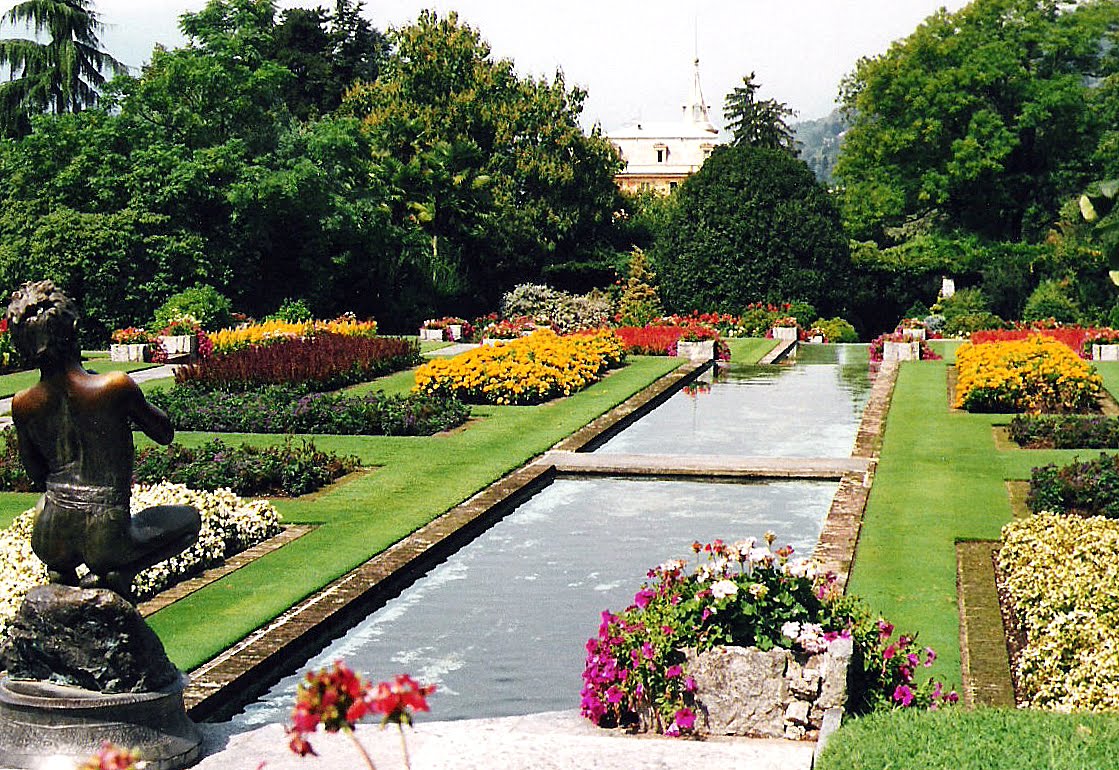
I enjoyed the arboretum at Villa Taranto (right,) on Lago Maggiore too.  The problem with being inspired to plant trees of course is the need for the foresight of Capability Brown.  One just has to try and use one's imagination.

Tuesday, 21 January 2014

Bernkastel - Kues


Some wise 14th century citizen of a little Moselle wine town should be credited with real foresight for devising one of the best marketing ploys ever invented for a 21st century wine.  All you have to do is have your product save the life of the Elector Palatine as he lies gravely ill.  Now some might question why the Elector became ill in your town in the first place, whilst others might argue that if he was so easily revived he cannot have been all that sick.  Nevertheless the legend adds a quality to Benkastel wine that can hardly be improved upon.


Some of the wine can hardly be improved upon either, as you can establish for yourself at an excellent tasting establishment in Kues on the opposite bank of the river.

The river turns out to have been important in local history for more than just economic reasons.  The plague broke out in Bernkastel but not Kues in 1627 and in Kues but not Bernkastel in 1641.  The first bridge was not built until 1874, which allowed the merger of the two communities in 1905.

Bernkastel is a very picturesque little town, with beautiful half-timbered buildings, especially around its market square.  The remarkably narrow Spitzhäuschen is a famous example of the type.

Tuesday, 14 January 2014

Scottish Debt

The only surprising thing about the UK Treasury statement that it will honour all UK debt, including Scotland's notional share, in the event of Scottish independence is that the statement needed to be made at all.

A gilt-edged security certifies a contract between a lender and the UK as a sovereign borrower. A contract cannot be unilaterally amended by one of the parties.

It is fair criticism to say that I should not have used the word default in my articles on this subject back in November, since that word might be understood as suggesting that the lenders risked not being repaid at all, rather than not being repaid by the beneficiary. Legally the UK government is responsible for its borrowing, irrespective of whether the whole of the UK or only a part is in receipt of the resultant spending.

The point that I made in November is still valid. The divorcing partner who refuses a fair share of the joint debt behaves immorally. Suspect behaviour raises the spectre of default in the collective mind of the market and that raises interest rates for the irresponsible partner's future borrowing.


Friday, 10 January 2014

Corvidae

Members of the crow family are to be found on Sliabh Mannan in considerable numbers. 

Probably most numerous are rooks (Corvus frugilegus), whose noisy flocks build villages of untidy nests in the tops of the tallest trees in the surrounding woodland.  They are very sociable and commonly go around in large groups.  Quite often we see a collective search for food in grass fields, with several birds all speaking at the same time.  The uproar sounds just like a session of parliament and it is easy to imagine votes of censure being passed by the assembled birds against farmers who regard them as pests and shoot at them in the lambing season. 


Rooks (above left) are easily distinguished from the similar-sized carrion crows (Corvus corone) (right) by their grey beaks and grey patch of skin on the face. 

The crows tend to appear in much smaller numbers, often ones and twos. They are very hard to photograph because of the uniform blackness of their plumage, from which it is very difficult to pick out clear features.


Magpies (Pica pica) do a very good impression of being always dressed for dimmer, but since dinner is likely to include small birds and nestlings they are not often welcome guests. They are rumoured to harbour larcenous intentions as well.  From a bird photographer's point of view however they do offer at least the potential for better compositions than their all-black relatives.

There is at least one pair of ravens (Corvus corax) in the neighbourhood, but so far I have seen them only in flight and photographed them poorly.  The easiest distinguishing features of this bird are the wedge shaped tail and 'cronk' call note.


Jackdaw (Corvus monedula) families have moved into a couple of disused chimneys of our house, which seem to be large enough to contain nests for these smaller members of the crow family.  This was not too much of a problem until the night when one fledgling fell down the chimney and landed sootily in the bedroom!  Fortunately I was able to release it without too much difficulty or damage.   The jackdaws, with their shorter overall length and stubbier wings seem to be capable of some remarkable aerobatics.

I have mentioned in an earlier post how good the crow family are at mobbing buzzards.  Usually the aggrieved raptor will just lumber stolidly away, doing its best to appear unconcerned.  Recently however I observed an interesting variant.  The buzzard simply climbed in a spiral until it exceeded the operational ceiling of the mob, all of whom promptly dropped away and descended again to the tree tops.

Friday, 3 January 2014

Ask a Silly Question

It is annoying that the standard of the independence debate remains low.  Such an important issue deserves better.
For example, we are told that most people agree with the proposition "decisions about Scotland should be taken in Scotland". What a surprise. Surreptitiously sliding emotional bias into surveys is a standard method of distorting results.
Suppose we consider a few other questions formatted in a similar way. For example, do we agree that "decisions about banks should be taken in banks"? Is it purely a matter for bankers to determine whether our deposits should be invested wisely or repaid on demand? No? Thought not.
Perhaps the Northern Isles might care to claim that decisions about the Northern Isles should be taken in the Northern Isles? How would Edinburgh respond to the assertion that "It's Shetland's oil"?
Let us pursue the logic further. Can anyone think of any reason why decisions about me should be entrusted to anyone but myself? What's all this nonsense about having to obey laws?
It should be fairly obvious that it is almost impossible to take decisions affecting one part of a community that do not affect other parts of that community, sometimes very seriously. For any society to be viable, its members must sacrifice some of their individual freedom to the greater good. The real question is therefore whether the value of the greater good is more than the value of the sacrifice.
Now let's think. What would be a good example? How exactly did Scottish banking get bailed out during the financial crisis? Who is placing the warship orders that could keep the Clyde shipyards open? Who decided to give Scotland a bigger share of UK public spending per head than England?
Or perhaps these are the sort of decisions about Scotland that should be taken in Scotland?