Wednesday, 27 February 2019

Red Box II

Curiouser and Curiouser. You wait years to feature in Red Box, only to feature twice in a week in early February. Then, lo and behold, you feature twice in a week again in late February. I am beginning to think this must be an easy gig since Times readers are overwhelmingly remainers, just like their columnists, and some balance is required. Can anybody point me towards a publisher of short stories in similar urgent need of my contributions?
Anyhow, on Monday Matt Chorley’s Red Box email published answers to ‘What song do you think best represents the current political landscape?” I got a name check, though not a quote, for the second of my suggestions:
The half-baked understanding of issues and fractious behaviour of MPs could (with a slight movement of the apostrophe) be represented by Frankie Laine's song "The Kids' Last Fight". However, the remarkably desperate efforts to restrict a second referendum's options to Remain or May's Deal (Remain in All But Name) does rather suggest Hank Williams' "Your Cheatin' Heart".
Then today’s question was ‘What is the point of a second referendum?’ My quotation was a perhaps slightly misleading first two sentences of:
The objective of a second Leave / Remain referendum would be to invalidate the first one before it's been implemented so no-one can prove Leave works. Unfortunately, Leave would win again. To remove any possibility of democracy it will, therefore, be Remain versus May's Deal (otherwise known as Remain Mk II). Even Remainers can't lose a Remain versus Remain referendum. Can they?

Friday, 8 February 2019

Red Box

Those who have noted my Blog items and Quora answers on and around the subject of Brexit may not be surprised to find that I subscribe to Times reporter Matt Chorley’s daily ‘Red Box’ email from the political coal face.
Matt includes a daily ‘Have Your Say’ section, in which he invites readers to email him about a chosen topic. To my considerable surprise, this week he quoted my responses on consecutive days.
The first topic derived from a poll of Times readers which found David Cameron attracted most blame for the Brexit mess. In reply to the question ‘What would you say to David Cameron if you bumped into him?’ I apparently sent in the only email supportive of our Former PM. It was, of course, too long, so just the first two sentences merited quoting. Here’s the full version:
David, you should ignore the Remainers who keep blaming you for Brexit. The fact is, you were the first PM in 40 years with the guts to ask whether The UK was happy to stay on the road to European Federalism. According to most of the political elite, it didn't matter whether the people agreed with this destination, just so long as no-one ever asked them. You may not have expected the result, but you had the grace to accept it. That's actually called democracy. It's just a pity you didn't stay on to see it through. Like you, your successor doesn't agree with Brexit. Unlike you, she doesn't understand it either.”
The second question, stemming from Donald Tusk’s colourful simile, was ‘Which Brexiteer would you consign to a special place in Hell, and why?’ Having learned my lesson the previous day, I kept this short.
Since Remainers are 'holier than thou' and therefore expect to be consigned to Heaven, there are no Remainers in Hell. In which case Hell can't really be all that bad.”

Tuesday, 5 February 2019

Will life be better after Brexit?

Lunch in Strasbourg
The decision to leave the EU was taken long ago, yet the sort of questions which were asked back then are still being repeated. The answer is the same. Those who didn’t accept it back then won’t accept it now, because no significant new evidence is available. If they want proof and won’t do anything until they get proof, then sadly they will be part of the problem, not the solution.

Having more control over our national life, because important tools are back in our own hands, does not necessarily make things economically better. It depends upon us. Life after Brexit is going to be more what we make of it and less what we rely on others to make of it for us. It will require all our best efforts.

How many great discoveries were made by people who might have enjoyed a perfectly comfortable life without rocking the boat but wanted better? By contrast, how many achievements fell to grumblers who sat back and waited for those embarking on a new path to fail, so they could scoff and say ‘I told you so’?

I hope I’m wrong, but I get the feeling some people would rather see their country fail than admit the possibility that it could be made a success outside the EU.

A world economy growing faster than the EU is out there, but we have to get out and compete in it. Prosperity won’t be handed to us on a plate. Like most worthwhile investments it will require hard work, risk-taking and short term sacrifice. If a substantial proportion of us sit back and wait for others to prove they can deliver, we shall inevitably neglect a substantial proportion of the new opportunities we might have taken.

The proverbial Five (or Six) Ps work backwards as well as forwards; not only Yea-sayers but Nay-sayers influence the future.

Friday, 18 January 2019

'Sir Robert's Gargoyle' is in Cosy Crime anthology

I'm very pleased to say that my story 'Sir Robert's Gargoyle' is included in the latest of Flame Tree's beautiful hardback anthologies.

Just for once this is a story in which the protagonists are perhaps not in what you would call the first flush of youth. Well, an occasional hooray for us oldies is not out of place. Adventures like this are still possible!

This latest volume in the series is packed with armchair detectives, murders in the vicarage, family secrets unravelling in gossipy ears, and the ingredients of a genteel bloodbath in an otherwise delightful village. Contains a fabulous mix of classic and brand new writing, with contemporary authors from the US, Canada, and the UK.

Classic authors include: Arnold Bennett, Ernest Bramah, Anton Chekhov, Arthur Conan Doyle, Andrew Forrester, R. Austin Freeman, Anna Katherine Green, Maurice Leblanc, Arthur Morrison, Baroness Orczy, Catherine Louisa Pirkis, Edgar Wallace, Israel Zangwill, G.K. Chesterton.

Contributions by Stephanie Bedwell-Grime, Joshua Boyce, Sarah Holly Bryant, Jeffrey B. Burton, C.B. Channell, Gregory Von Dare, Amanda C. Davis, Michael Martin Garrett, Philip Brian Hall, E.E. King, Tom Mead, Trixie Nisbet, Annette Siketa, B. David Spicer, Nancy Sweetland, Louise Taylor, Elise Warner

Wednesday, 9 January 2019

R.I.P. Mac 2012 – 2019


Mac

A rapid decline, the result of an unexpected onset of liver disease and jaundice, resulted in our much-loved Dogue de Bordeaux, Mac, having to be put to sleep today at the age of six.

He arrived as a rescue in October 2016 and by the sheer force of his sunny personality and devoted loyalty brought joy back into our home and our hearts.

Mac enjoyed having a large garden and being taken on country walks every day. Before long he was an experienced marsh dog, as witness the photograph above.

As John Oaksey succinctly put it, “One of the worst things about being human is you outlive so many good horses and dogs.”

Strangely enough, we never seem to learn from days of sorrow such as this. We always know we will put ourselves through it again and again. Our animals are a major part of our life and it is impossible to imagine things being otherwise.

The years of happy companionship live in the memory long after the acute sorrow of loss fades, which is as it should be.

Farewell, Mac. And thank you.

Tuesday, 8 January 2019

Why has no-one mentioned the enormous benefits of EU membership?

One of the most disappointing things about the 2016 Referendum campaign was the failure of Remainers to enlarge upon the alleged benefits of EU membership. Instead, the whole thrust of their campaign was negative- threats of cataclysm should the British electorate be foolish enough to vote to leave. Most of these dire predictions were patently absurd, apparently leaving even the PM embarrassed. Where the harmful consequences were real, they were insufficiently widely applicable for most voters to care.

It may be of some interest that the term ‘Project Fear’, used to describe this negative campaigning, had actually been coined two years earlier by Scottish nationalists to describe the unionist campaign during the independence referendum. In both cases the campaign against change took a negative form, leaving optimism almost entirely to the advocates of breaking away. In both cases the response to expressions of aspiration was yet more negativism: you’re lying, you’ll never be able to do that, etc. In both cases, the reaction of floating voters who might have been persuaded either way was to swing away from the negative campaign and towards the positive one. Essentially, it seems, British voters really don’t take kindly to threats.

When I observed the line the establishment, who were almost all Remainers, were taking in 2016, I couldn’t believe they were doing it again. Had they learned nothing the first time? Had they perhaps not noticed that negativism and threats had gone over like a lead balloon in Scotland? If they’d set out to maximise the vote against the status quo, they couldn’t have picked a better tactic. Moreover, given that the status quo wasn’t really available in a rapidly-integrating Europe where the UK needed opt-out after opt-out, the plan was even less intelligible second time around.

I am driven to the conclusion that the establishment has so little practice in explaining themselves positively because political correctness blocks all discussion of alternative views. Bien-pensants regard their own way of thinking as so obviously correct that they think even the dimmest fellow-citizen must necessarily see it too. They take their self-righteousness so completely for granted that they never have to produce reasons why they are right and their opponents are wrong. As J S Mill predicted, they have lost the art of crafting rational arguments. When they do finally encounter opposition, all they can do is hurl ad hominem abuse.

In short, the reason no-one mentioned the alleged enormous benefits of EU membership was that no-one in a position to influence the debate could remember what they were.

Monday, 17 December 2018

Why does May not hold another referendum, as there seems to be no other way out of the Brexit mess?

First, let’s define our terms. What Brexit mess do you have in mind?

To be clear, Brexit itself is not a mess; departure from membership of a voluntary association of states cannot be other than a straightforward matter of giving due notice and letting that notice expire. Being outside the EU is perfectly possible: most countries are. Any attempt to punish a departing member would be clear evidence to the peoples of the EU that they had been lied to and membership was no longer voluntary. Moreover, if the benefits of membership are so few that departures can only be prevented by punishment, then the organisation itself is deeply corrupted and unfit for purpose.

For forty years the UK population were not consulted on the progressive losses of sovereignty involved in the transformation of the EEC into the EU and the latter’s acquisition of its own citizenship, currency and constitution. When the people were finally offered a choice, they voted to leave the EU. The question now is, shall their choice be honoured, as they were promised at the time of voting?

The UK’s pro-EU cabinet, which called the referendum to clear up Conservative Party problems, had not anticipated the possibility of a Leave vote. Despite being unprepared, our Remainer-dominated parliament nevertheless felt obliged to enshrine the referendum’s outcome in law. As a result, the UK is set to leave the EU, with or without a deal, on 29 March 2019. So far, so good.

However, many parliamentarians haven’t yet given up on the idea of thwarting the popular vote. They conceal this inveterate hostility by refusing to enact any specific withdrawal procedure. So now we have a political dichotomy, in effect a stand-off between a population who have given parliament a clear instruction and a parliament which will not accept it.

Claims of parliamentary sovereignty were all very well in the past when power was wrested from the hands of a tyrannical monarch; they’ll ring pretty hollow today if parliament tries to wrest sovereignty away from its own electors.

By your use of the words ‘no other way’, you seem to assume that a second referendum would be a way out of this impasse. In fact, let’s not mince our words, what you are suggesting is that parliament stands firm in its defiance of the popular vote and forces the people to vote again.

With due respect to other respondents who deny that a revolt of parliamentarians against people is a constitutional outrage, I hope you can see that the damage to UK democracy would be potentially irreparable, irrespective of the outcome.

The 2016 referendum produced a horribly-divided, tribal society. No arguments will persuade the vast majority on both sides who made up their minds long ago. Years later, some activists still find it impossible to restrain their bile and contempt for those whose only crime is holding a different point of view. Most people, I think, are just glad the horribly divisive campaign is over and wishing all the wrangling and bitterness was over too.

In the event of a re-run, all that can happen is that the old wounds are opened up again. One-time friends and neighbours who have just about learned to talk to each other once again (on neutral subjects) will be flung back into the cauldron of mutual abuse, now garnished with additional supplies of recrimination resulting from having to go through it all again.

Either the result will be confirmed, in which case the whole thing becomes a needless exercise in societal self-harm, or it would be reversed, in which case this socially-divisive issue will simply continue to fester until a third referendum can be called.

And you can be quite certain it would be called before very long. Another general election is due in 2022 and there’s mileage to be made from the politics of grievance. Look at the aftermath of the ‘once in a generation’ Scottish referendum. Look at the Remainer campaign to sabotage Brexit. This angst is the built-in curse of any referendum system.

In such an event, Leavers would correctly point out that Brexit wasn’t even attempted. The only thing demonstrated by the second referendum, they would say, was the power of vested interests and the political elite to drag our country back into the clutches of an organisation that has shown itself malign and vindictive. The parliament that acted as the agents of that treachery will be derided as a mere cypher, unworthy of either trust or respect. And from such a can of worms, who knows what unpleasantness may crawl out?

Partiality aside, consider for a moment. Someday, somehow, we have to return to being one society, not two tribes; not winners and losers but one people. Does anyone seriously suggest a second referendum is going to help us do this?

(This was my reply to a Quora question.)


Friday, 23 November 2018

Which would damage Britain more, Brexit or a second referendum?

When I was a child, I lived with my parents. They always did their best for me and I was never hungry or shabby. When I grew up I decided I needed to make a life for myself away from home. I met a girl and we married. In the early days of our marriage, we were poorer than I had been when I lived with my parents, but we stuck at it and worked through various difficulties until we achieved a comfortable lifestyle, very considerably better than my parents had enjoyed. And because my parents were good parents they backed me throughout this struggle and were delighted with the outcome.

Now, bearing in mind that your parents may not live as long as you, tell me which is more damaging, to endure through the early difficult years of independence in order to make a good life for yourself, or to give up at the first hardship and go back to your parents’ home where it’s safe and secure in the short run?

There are some unfortunate people who, through no fault of their own, do not have an option. There are some people who choose the second option. But if everyone chose the second option, society would collapse, wouldn’t it?

Let us please remember that the 2016 Referendum was the UK electorate’s first opportunity for forty years to make a choice on the direction taken by the EU.

As it happens, I had read the fine print and voted ‘No’ in 1975. However, I blame no-one who was at that time under the impression that the EEC stood for free trade and nothing more. It’s no good now pointing to old documents, you really had to live through that campaign to know how much pressure was put upon a public that had only a couple of year’s experience of life on the inside and still saw an exciting prospect.

But to all those who now claim that changed circumstances within a scant two years necessitate another plebiscite to confirm our departure, may I politely enquire how vigorously you campaigned for a vote on the loss of sovereignty entailed by the formation of the EU at Maastricht? Were you satisfied with the opt-outs negotiated by Major or did you consider the UK was being marginalised within a determinedly integrating organisation? Not a change in circumstances worth a vote, eh?

How upset were you when the EU constitution, on which we had been promised a vote, was re-badged as the Lisbon Treaty and pushed through regardless of rejection by other countries? Did you worry at all about the erosion of the veto and the rise of majority voting? Did you care when the Eurozone members began meeting on their own to form a common position to put before the European Council, where they collectively outvoted the non-members? More huge changes, but again not worth a vote?

If none of these things caused you sufficient disquiet to call for a further referendum, then I respectfully suggest it is disingenuous to call for one now, when Brexit has not even been implemented and the only new information to hand is that negotiations turned out to be more difficult than expected. In that context, I invite you to bear in mind that prominent Remainers have publicly urged the EU to be tough on the UK in order to assist their campaign to reverse the decision to Leave. In other words, your own team has made a significant contribution to the difficulties of which you now complain.

The electorate gets one choice in forty years, the people make their choice and you think you can campaign with impunity for that choice to be overturned before it is even carried out? Seriously? You think that democracy in the UK will not be dreadfully damaged in the process? Two hundred years after Peterloo, has the establishment truly learned so very little?

Have you taken note of polls showing the low regard in which politicians are already held compared to other groups? In 2016 the government pledged to implement what the people decided. That pledge has not yet been met. If it is not met, then do not expect a restoration of trust in the political system within a generation.

Wednesday, 7 November 2018

Book Review:
'Adults in the Room' by Yanis Varoufakis

Some critics of Varoufakis are clearly unreasonable. He did not create the Greek debt crisis of 2015; he inherited it.

A so-called bailout programme which actually reduces the national income of the debtor economy, rendering it even less able to pay than it was before, is demonstrably unsustainable. Kicking the can down the road, by what is called ‘extend and pretend’, protects badly-managed international banks at the expense of ill-advised Greek citizens and their livelihoods.

A Greek default would have led to the country’s ejection from the Eurozone and who knows how much damage to the EU project.

We need to remember that the single currency’s advantage over earlier programmes such as The Snake and The EMS was supposed to be its irrevocable nature. If Greece could be forced out, what would prevent the next victim of the single currency’s poor design being forced out too? Was it reasonable to expect Greece to take one for the team? I hardly think so.

The Lesson of ‘Adults in the Room’ is essentially an old and simple one: When you are in a hole, stop digging. But that advice is sadly oversimplified. You find that others in the same hole won’t, for a variety of reasons, stop digging. What’s worse, the owners of another, much bigger hole, see digging you further in as a wonderful means of digging themselves out.

Though his short career as Greek Finance Minister may have appeared Quixotic, the sad truth is that Varoufakis was tilting at real giants, not windmills. As is all too common with giants, many of these were not all that nice, and there were simply too many of them out there.

I recommend ‘Adults in the Room’ not just to critics of the EU, but to anyone tempted to overdose on a Public-Relations-based idealisation of a deeply-flawed organization.

*****

(5 Stars)


Sunday, 4 November 2018

What worries me about UK politics.


To begin with, let me declare an interest. In 1979 I stood for election to parliament as a Liberal, back in the days when there was a Liberal Party. I was one of the 100 prominent Liberals (‘prominent’ being a relative term in this context) whose names were listed in the press as opponents of the Lib-Lab Pact.

There is no longer any British political party representing my broadly centrist position. I have to say with regret that since the merger with the Social Democrats my former party has turned into something neither liberal (in the classic sense) nor democratic (as demonstrated by its attitude to the EU Referendum result). For me, this explains its failure to fill the vacuum in moderate politics created by the polarisation of the two main UK parties and the rise of fissiparous nationalism in Scotland.

I am troubled by the seemingly inexorable rise of identity politics. In politics, I do not care about a person’s identity, I care about the quality and rationality of his or her ideas. To value ideas only insofar as they are uttered by an approved sort of person and to dismiss ideas uttered by any disapproved sort is a classic ad hominem fallacy, offering no hope of reaching the truth. Identity politics emphasizes irrelevant divisions and breaks down social cohesion to our collective diminution as citizens.

Another major concern is the diminishing respect for free speech. Extreme political correctness is the new fascism. No-platforming, shouting down, political violence and other forms of mob censorship are rapidly destroying our free society. I find it so tragic that things for which my father’s generation fought and died are so little valued and so lightly cast away by people who have the nerve to call themselves liberals. I’m sorry, but such people do not know the meaning of liberalism; they should read JS Mill’s On Liberty and learn what it is.

I value social media. Living as I do in rural isolation, forums such as this allow me to feel close to people all over the world. At the same time, I worry about the apparently deliberate policy of some media to create what has been called ‘echo chambers’; self-reinforcing factions rarely exposed to alternative views. When the certainty of one’s own righteousness becomes intense, there is an unfortunate tendency to respond to contrary views with hostility and belligerence rather than reasoned argument.

(In passing, may I mention that as a former philosophy teacher I know a thing or two about rational discussion. It was frequently necessary for me to play devil’s advocate, putting forward arguments for a view I didn’t actually support because it was necessary that someone should. You cannot convincingly claim to be correct if you are not familiar with the main objections to your view and able to offer reasoned refutations thereof. Without this there is only emotion and prejudice.)

I am disturbed by an increasing willingness to define ourselves by what we are against, rather than what we are for. Admittedly, this is often instinctive and reactionary. During the Scottish Independence referendum the unionist campaign understandably resorted to playing down the prospects of an independent Scotland but I would have preferred to see far more emphasis on what the UK had achieved and could in future achieve through integration. Likewise, the Remain campaign’s scaremongering about the dangers of leaving the EU was far more prominent than any enumeration of the benefits of membership.

I know politics has always been a bear pit. Confrontation is the nature of the beast. Yet it is vital to keep in sight the underlying truth that the UK collectively is far more than the sum of its parts. Split its countries or its society apart and we all suffer.

I wish I could have said the same for the EU. Sadly I can’t. The direction it has chosen is one which benefits just some citizens at the almost unbearable expense of others.

Friday, 12 October 2018

Scotland and the Pound

I received an abusive comment on Quora , which maintained that the pound was as much Scotland’s as England’s. Please permit me to clarify:

Yes, the pound is as much Scotland’s as it is England’s, which is to say, not at all. The pound is the currency of the United Kingdom, the laws of which include a currency union created by and subject to that same set of United Kingdom laws.

Monetary policy within the UK is the responsibility of the Bank of England under a series of Acts of the UK Parliament. For example, though the Bank of England has a legal monopoly of the note issue, Scottish commercial banks are allowed to issue notes under licence. Under the 2009 Banking Act, they must hold sufficient reserve assets (Bank of England notes or gold) to maintain the value of their notes in the event of commercial failure. This is because, strictly speaking, Scottish notes are not legal tender but promissory notes.

Just as withdrawal from the EU would leave the UK no longer subject to EU law, withdrawal from the United Kingdom would leave Scotland no longer subject to UK law, which includes the laws governing the currency union and the laws governing the note issue.

An independent Scottish government could choose to issue a currency called pounds, but it could not choose to issue UK pounds since it would no longer be part of the UK. (There is no prospect of Scotland being recognised as the continuing state as opposed to the ten times larger population from which it would have withdrawn, which would continue to be governed by UK law.) The Scottish pound would thereafter become, domestically and internationally, a separate currency from the UK pound. The exchange values of the two currencies could diverge.

Regarding sterling, Scotland would have two options:

  1. To ask the rUK to continue the currency union, which was what the then Chancellor specifically ruled out in 2014, or

  2. To use UK sterling (now a foreign currency) within Scotland as Panama currently uses the US dollar. This places monetary policy in the hands of the issuer of the currency, that is to say, the rUK.

Thursday, 4 October 2018

The siren song of socialism

the days of steam rail
The Labour Party Conference has promised to turn the clock back. But were the former communist economies really so admirable?

Eastern Bloc command economies were able to achieve rapid economic growth initially because they still had a large percentage of the workforce underemployed in agriculture, much of which could be directed into more productive industrial employment. Additionally, the USSR, in particular, had under-exploited natural resources where exploitation rates could be increased. For a while, therefore, they were able to outgrow the capitalist economies for which both of the above advantages had expired decades earlier. This was the period that suggested the model could work.

However, once the playing field levelled out and both economic models could only grow through efficiency improvement and investment, the command economies fell behind because there was no competition to stimulate innovation. (You don’t have to build a better car than the Trabant if the Trabant is the only car that the masses are allowed to buy.)

The command economies also wasted up to ten percent of the labour force taking the place of market forces to plan what the remaining ninety percent should do, and created perverse incentives to meet set targets rather than operate efficiently.

This coincided with improved communications so that an international demonstration effect alerted Eastern consumers to the fact that lifestyles were better in the capitalist countries. Essentially the USSR’s empire collapsed because it couldn’t compete in the arms race and the consumer products race at the same time.

Putin’s revanchist regime has courted popularity through encouraging nostalgia for the lost empire but is now running up against the same constraints, which is why he’s having to raise the pension age despite the resulting unpopularity.

Of course, certain UK politicians’ ideas are rooted so firmly in the past they seem not to have noticed Russia is no longer the USSR and no longer even makes a pretence of putting the workers’ interests first.

Saturday, 15 September 2018

Cosy Crime from Flame Tree

I'm delighted to announce my third acceptance from Flame Tree, this time for their forthcoming 'Cosy Crime' anthology.

My story is called 'Sir Robert's Gargoyle'. It is a mystery set in and around an English cathedral, where during the Civil War in the seventeenth century the church silver disappeared and was never recovered. An unlikely modern sleuth sets out on the trail of the loot. I do hope you will like it.

Cosy Crime is scheduled for a January release. The contents include:

Honey of a Jam by Stephanie Bedwell-Grime

Longfellow's Private Detection Service by Joshua Boyce

Peppermint Tea by Sarah Holly Bryant

Eykiltimac Stump Acres by Jeffrey B. Burton

Death in Lively by C.B. Channell

The Body in Beaver Woods by Gregory Von Dare

The Glorious Pudge by Amanda C. Davis

Twenty Column Inches by Michael Martin Garrett

Sir Robert's Gargoyle by Philip Brian Hall

Open House by E.E. King

The Whittaker-Chambers Method; Or, Mulligan’s Last Mystery by Tom Mead

Scoop! by Trixie Nisbet

The I's Have It by Annette Siketa

Murder on the Lunar Commute by B. David Spicer

Just the Fax by Nancy Sweetland

Raven Nevermore by Louise Taylor

A Mouthful of Murder by Elise Warner


These contemporary authors will appear alongside the following classic and essential writers: Arnold Bennett, Ernest Bramah, Anton Chekhov, Arthur Conan Doyle, Andrew Forrester, R. Austin Freeman, Anna Katherine Green, Maurice Leblanc, Arthur Morrison, Baroness Orczy, Catherine Louisa Pirkis, Edgar Wallace, Israel Zangwill, G.K. Chesterton.

Sunday, 9 September 2018

Is it more important for Scotland to be in the EU or the UK?

The question begged here is more significant than the question asked, isn’t it? Could an independent Scotland get into the EU? There are several reasons why it might not, and all of these have been rehearsed ad nauseam. Is it worth going over them yet one more time? Probably not. It’s a complete dialogue of the deaf. Essentially it boils down to a disagreement between SNP supporters (who see no obstacle to anything) and unionists (who see obstacles to everything.)

Realistically, it seems far from certain that the option assumed in the question is actually available just for the choosing, especially in the short term. Pragmatically, an independent Scotland must be prepared for membership of neither union.

Perhaps we could look at the people involved instead of the economics. Scotland’s current residents include around 475,000 British nationals from other parts of the UK. Meanwhile, about 720,000 Scots live elsewhere in the UK. Intermarriage for 300 years has produced a very large number of people of mixed Scottish/other-British heritage and today’s British families (including my own) can comprise persons born on different sides of the border.

All of a sudden upon independence, a million and a quarter people would find they no-longer lived in their own country. One of them would be me. Personally, I find the prospect devastating.

Neither group of ‘exiles’ could be deprived of their present nationality against their will. An independent Scotland can offer Scottish nationality to non-Scots-born residents of Scotland, or possibly to Scots-born residents of the rest of the UK, but it cannot force it upon them.

In fact, it must be legally dubious whether a Scottish government could even force nationality change on Scots-born unionists. In the short term at least, a British passport is likely to be more valuable to travellers than a Scottish one.

It is therefore not beyond the bounds of possibility, in the event of a narrow vote in favour of independence, that the subsequent Scottish population would be almost equally divided between Scots and resident aliens.

We’ve recently had cause to notice how well the dividing of a population almost equally across passionately-felt identity lines has gone, I guess?

Wednesday, 15 August 2018

Alternative Theologies

My story 'Devine Justice'  is included in the latest of the B-Cubed anthologies Alternative Theologies.

I'm delighted to share the table of contents with these notable authors and I do hope people will enjoy reading the book.

We hear quite a bit about alternative comedy, alternative history and so on these days. I've not previously come across a publisher willing to take the spirit of adventure into this sensitive but vital area.

Religion cannot be excluded from the remit of free speech. Even what we believe to be true must be examined and tested. It is impossible to prove that truth is false, yet it is so easy for an unexamined truth to degenerate into a dead letter and meaningless recitation.

This is why genuine religious philosophers always welcome rational challenges. Those who permit no discussion serve neither their own interests nor the interests of the truth.

Anyway, my story examines what happens when a defence attorney who is a master of sophistry and rhetoric faces his sternest test: his own trial on charges of breaking the laws of God. I'm very fond of this tale and I hope you'll all like it.

Friday, 27 July 2018

Tired old Propaganda


I studied economics at Oxford, taught it, helped introduce management science as a secondary school subject in Scotland and subsequently examined it.

However, there are considerably more eminent economists than me who support Brexit. Perhaps I might pray in aid the 2017 report by Patrick Minford, Professor of Economics at Cardiff University and Roger Bootle, Chairman of Capital Economics, Europe’s largest macroeconomics consultancy, among others. The group included six former economic advisers to government and eight university professors.

“Brexit could boost the UK economy by as much as £135 billion a year...it is time to abandon the gloomy forecasts of Project Fear and embrace Project Prosperity – the mounting evidence that quitting the protectionist EU will transform Britain’s prospects over the next decade.”

Now you may not agree with the distinguished authors of this report, but isn’t it about time to ditch the tired old propaganda campaign that Brexit is exclusively the province of the ignorant? Rational discussion is not aided by abusing those who don’t agree with you, nor by hysterical prophecies of cataclysm.

It simply is not the case that all the evidence points one way. As Spinoza pointed out, it depends on the colour of the glass through which you view it in the first place. In this case, also, there is a decision to be made on the balance of probabilities and of risk versus reward.

Even if majority opinion amongst certain groups did point one way it’s not much of a guarantee. I’ve been here before, being called a xenophobe and a fool almost two decades ago, when I was one of the relatively few economists who held that the UK should not join the Euro because it was unsoundly structured, would not work properly and would damage several European economies severely. Strangely enough, nowadays I find far more people who remember agreeing with me back then than I ever noticed at the time.

Wednesday, 18 July 2018

The working class vote

One interpretation of the referendum result seems to go largely unchallenged.

Some (mercifully not all) Remainers keep on and on about polls showing them to be better educated than Leavers. Apparently, this proves that all you need is a good education and you immediately see the virtues of the EU. In my opinion, this judgement contains more than a whiff of condescension.

Since I’m no longer young, my views are, of course, worthless anyway, but back in the day, I did win an open scholarship that took me from a Sheffield Council estate to Oxford University. So here’s a small thought from the graveyard’s anteroom.

When I took “A” Level, about 8-10% of 200,000 candidates obtained grade A. Today about 25% of over 800,000 candidates obtain grade A. In the mid 20th century under 20,000 UK students per year were awarded degrees; in 2010 over 330,000 students were awarded degrees.

I, therefore, very tentatively, propose an alternative explanation for the correlation between an extended modern education and voting Remain.

The vast expansion of university places in the UK over relatively recent years produced both a significant reduction in average undergraduate standard and a much greater exposure of young people to the ‘progressive’ views that enjoy dominance among younger academic staff.

I am far from convinced that a mediocre graduate is intrinsically more qualified to pronounce on this question than an expert plumber who left school at sixteen.

I was born in a working class area of Sheffield, the son of a naval petty officer who left the service after the war but died of cancer within a couple of years. My grandfather’s family had been agricultural workers in Norfolk for centuries, moving to the big city in the late nineteenth century to find work in the steel mills like so many before them.

It so happened I was born with a good brain. I did nothing to earn that, and whenever I get too proud of what I’ve achieved or too downhearted over my failures, I remember the folk whence I came and remind myself that but for good fortune I’d probably have had far fewer opportunities to make such lifestyle choices, right or wrong, anyway. I should have been amongst the thousands of ordinary working people who lost their livelihoods with the collapse of the steel and cutlery industries and had to struggle so very hard to bring their city back to life again.

I cannot speak for them; I realise that. I am too far away from them now, in both time and distance. But I know one thing for certain. They are good people. They are sensible people. They know a great many things about life that you need no academic qualifications to know. They are as entitled to their view of how the EU affects them as any southern banker or stockbroker.


Not many people have been privileged to enjoy the sort of education I have. But neither I, nor anyone else, has earned the right to patronise the working class who voted Leave.

Saturday, 14 July 2018

Free Trade versus Protectionism

Any set of circumstances will advantage some and disadvantage others, likewise any changes in circumstances. We can always find examples of those who are disadvantaged by change, but we do not, if we are wise, attempt to ban the development of motor cars in order to protect the livelihoods of stablemen and wagon builders.

Protectionism is in no-one’s long-term interest. Even when it is the collective protectionism of a number of advanced economies it is ultimately damaging to the optimum allocation of resources and hence to standards of living. Free trade with as much of the world as possible is in the UK’s best interest.

Right now the EU’s protectionism does temporarily benefit some producers but most of them are not in the UK. This is why, as a mainly service-based economy, we buy manufactures and agricultural products expensively from the EU instead of cheaply elsewhere and have a major trade deficit with the EU which does not reciprocate with a genuinely-free market in services.

Already the EU accounts for a rapidly diminishing minority of our trade. We enjoy a surplus in our growing trade with the rest of the world. The EU is slow-growing by world standards. Can anyone explain why it is sensible on a macroeconomic basis to remain tied to the shrinking, deficit-returning section of our trade to the disadvantage of the growing, surplus-returning section? President Trump, for example, has correctly highlighted the problems the Chequers proposals present for a trade agreement with the USA, our largest single market.

The point is that tariffs, in general, are not very important today as barriers to trade, though there are always specific exceptions to the rule of course. However non-tariff barriers are important and it is this which is at the heart of the EU’s protectionism. The EU rulebook is process-driven, not standards-driven. In other words, it is backward-looking and hostile to innovation. Such rulebooks can never keep up with technology and in the EU’s case are actively pressed to resist change by reactionary lobbyists.

The negotiations with the EU have long since passed the point where a deal could be mutually advantageous. It’s now all about preserving the EU by holding back the progress which the UK would be able to show once freed from the shackles. It is not in the UK’s interest to pursue the Chequers proposals or anything likely to flow from them.

Protectionism always has its advocates because it can yield temporary political gains to the protector. Free trade, by contrast, can yield mutual economic benefits to all participants. We will get good deals because it’s in the interests of other countries to give us good deals. It would even be in the interests of the EU, except that they prefer to protect their federalist agenda over their citizens’ welfare.

Remember that the UK is a service-based economy and the EU 27 are mostly not. The EU has been spectacularly unsuccessful in negotiating service trade deals, probably because its negotiators neither understand nor care what is needed. Switzerland etc. do perfectly well as standalone negotiators. This is because they do understand the needs of service-based economies, i.e. their own! The UK is the world’s sixth economy. Why can we not do what these other independent countries can do?

Tuesday, 10 July 2018

The wicked flee where no man pursueth


The Prime Minister’s latest Brexit proposal is already well on the way to Brexit In Name Only and, by the time Brussels has finished demanding even more concessions and the government has finished rolling over, the UK is likely to be in the limbo I have consistently described as the worst of all possible worlds.

Let us be clear: BRINO is not only worse than Brexit it is worse than Remain. The future envisaged by the Chequers proposals appears to be a UK permanently held hostage in the EU’s anteroom. We shall be obliged to accept all rules on goods etc. without any say in drawing them up. In practice, we shall have to implement the ECJ’s decisions on those rules. We shall lack the flexibility to foster innovation in new industries such as biotechnology, where we have a comparative advantage. We shall not be able to negotiate any goods trade deals with third parties that depart from EU rules; hence it seems unlikely that we shall be able to agree a deal with the USA, our largest single market. We shall be obliged to accept a permanent deficit with the EU in goods trade.

For the privilege of this absurdly disadvantageous arrangement, we shall pay the EU £37 billion pounds. By the end of the negotiations, I don’t doubt we shall also be paying annual fees too, so the point of making a divorce settlement payment at all escapes me utterly.

Meanwhile, Brussels will ensure that we cannot participate in any of the ongoing EU projects such as Galileo, though, in a magnanimous gesture, they will allow us to continue paying for them in our settlement bill.

Any sensible government would have held off triggering article 50 until it was sure that preparations for ‘no deal’ could be completed in two years. This government has allowed itself to be backed into a corner by assuming goodwill on the part of the EU, even when it was evident that none was forthcoming. Failure to plan for ‘no deal’ fatally undermined the UK negotiating position. The nearer the deadline approached without any plan for ‘no deal’, the more obvious it became in Brussels that the UK would take any (bad) deal rather than ‘no deal’.

The arrangement now proposed is so bad that one is tempted to suspect it was never the intention to allow Brexit actually to take place. If you had set out to secure the worst possible deal you could scarcely have done a better job.

I now suspect a second referendum was refused not because the establishment expected a different answer but because it feared the same answer. A confirmation of the public’s desire for Brexit would have made it that much harder to deliver the non-Brexit-dressed-up-as-Brexit which we now see is intended.

Naive ingenu that I am, I actually trusted the official government statement that the government would implement what the electorate decided. I should have known better. It was, after all, a promise made by politicians.

Truly, the wicked flee where no man pursueth. The pass defending UK democracy has been yielded without a struggle.

Friday, 6 July 2018

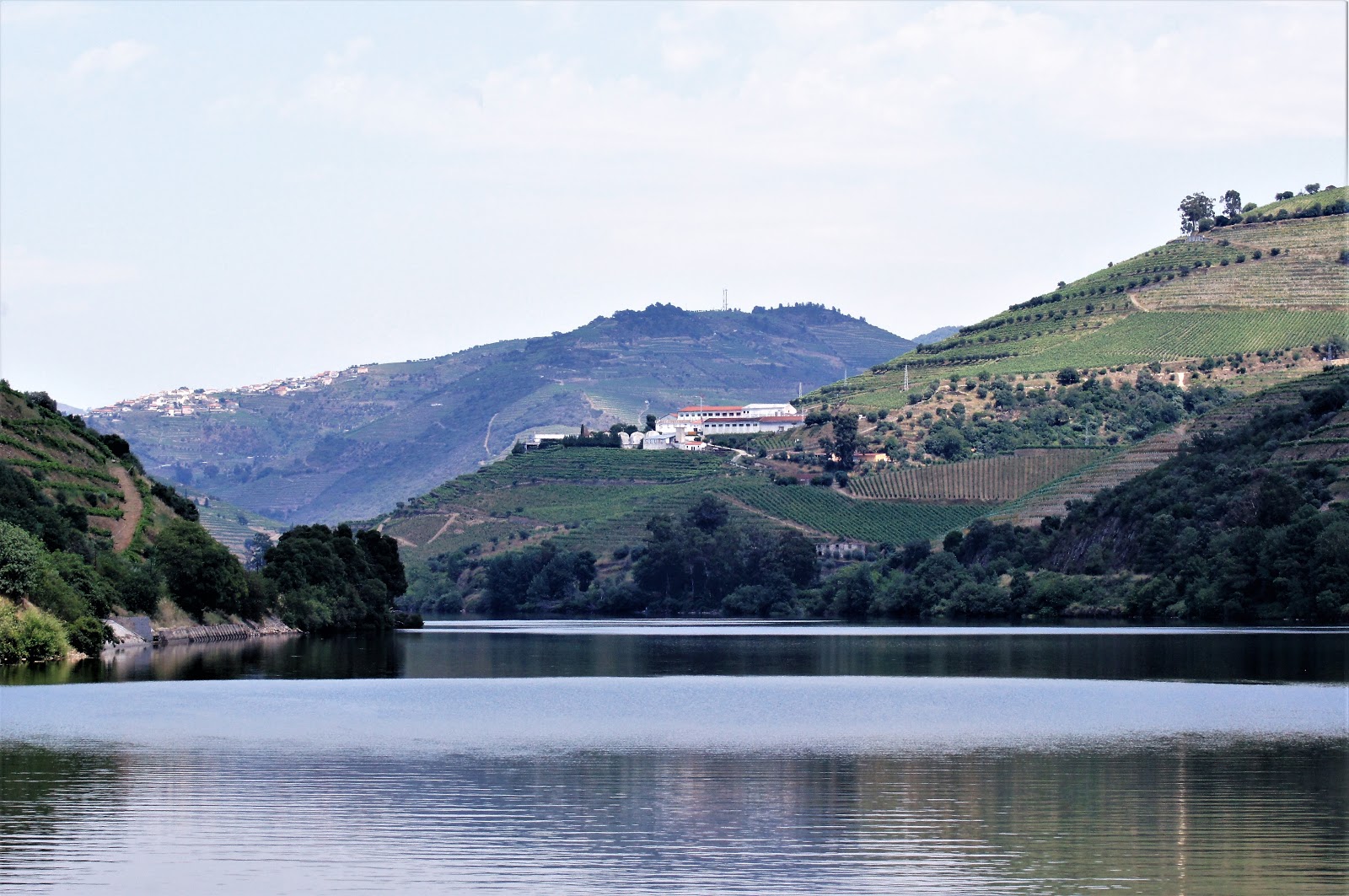
The Douro


The Douro is the third longest river in the Iberian peninsula and for seventy miles it winds through narrow canyons, demarcating the border between Spain and Portugal.

The entire Portuguese length of the river is now navigable, from Vila Nova de Gaia, at the estuary mouth opposite, Porto to the confluence with the River Agueda at the Spanish border. To make navigation possible many miles of artificial banks and five enormous dams / locks have been constructed. Carrapatelo, the largest of these locks, involves a single lift / drop of 114 feet.


Vessels of up to 272 feet long and 37 feet wide can pass these locks and entertaining cruises of one to two weeks can be arranged along the river. The ship on which we travelled, the Douro Elegance is only a year old and offers luxurious accommodation and facilities aboard.

The Douro has the world’s oldest demarcated wine producing area, as well as numerous groves of olives and almonds clinging to the rocky slopes on either bank. The quintas or wine estates are the centre of Port wine production.

Here, the shallow, rocky schist soil of the steep hillsides retains the day’s heat and radiates it back to the vines at night, preserving an even temperature. It also stresses the vines, forcing their roots deep and encouraging the production of grapes rather than excessive leaf.


I have to confess I was not previously aware of the existence of white port, which is a sweet aperitif. Ruby and tawny varieties of port I had encountered, but I was surprised to learn that only certain exceptional years are designated vintage and carry the date of the harvest. There are only one or two per decade. For other years the crucial thing is how long the wine matures in oak barrels (longer for tawny than ruby) and what year bottling takes place. Worth noting is that ten year old tawny is always ten years old, no matter how long you keep it in your cellar.