Wednesday, 29 November 2017

Pirates and Ghosts

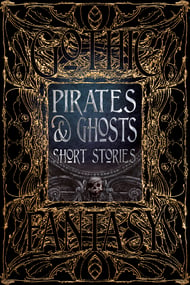
Nicely in time for Christmas shopping, here is the exciting new Flame Tree anthology Pirates & Ghosts.

This features my story Heavy Weather, a tale of the Royal Navy during the Seven Years' War (1756-1763), in which an impecunious lieutenant gets more than he bargains for when appointed salvage master of an unmanned vessel.

As usual from this publisher it's a beautiful hardback book that anyone would be delighted to own.

I don’t know whether it’s some kind of genetic inheritance from my sailor father, who died while I was still a toddler, but I've always been fascinated by the sea, and particularly by the age of sail. 

With all our technological advantages today, the sea can still catch us out if we don’t treat it with respect. The daring of the men who challenged the sea in ships made of wood, at the mercy of wind and weather, finding their way by measuring the angle of the sun and the stars, deserves our admiration. And if the way to hear a tall tale in a dockyard tavern is to stand an ancient mariner a glass or two of rum, by my reckoning it’s cheap at the price.

Saturday, 18 November 2017

The Sovereignty of Parliament

In the UK, the sovereignty of parliament derives from the people. It was historically asserted against the arbitrary use of prerogative powers by the monarch, who was the hereditary head of the executive, and it was steadily strengthened after The Glorious Revolution of 1688 and the Bill of Rights.

At the end of the eighteenth century Edmund Burke asserted that an MP was not a delegate but owed his electors the benefit of his advice. This doctrine is still asserted today when MPs wish to establish their independence from the electorate.

However Burke was writing long before the democratic extensions of the franchise that began in the nineteenth century. The electors he had in mind were the bourgeoisie, not the working classes who had no votes. It might be reasonably supposed that a full time parliamentarian in those days had a better grasp of current issues than a voter who could only learn of them from the newspapers and was only consulted at corrupt elections.

A general election is a blunt instrument anyway. Voters choose a representative; they do not pronounce on individual issues. It is therefore not unreasonable to suggest that the political innovation of referendums has altered the relationship between voters and representatives. The MP now knows his constituents’ wishes on specific issues, as well as the will of the electorate at large.

Those opposing Brexit in Parliament might therefore be considered somewhat disingenuous. For forty years all major parties supported EU membership. They naturally selected a substantial majority of parliamentarians who also supported membership.

In the 2016 referendum the public rejected membership despite all major parties campaigning in favour.

In the 2017 election all major UK-wide parties campaigned on a platform of implementing the popular will as expressed in the referendum.

What we actually see is an effort to sabotage Brexit in a suddenly rediscovered enthusiasm for the principle of parliamentary sovereignty. However this is no longer asserted against the arbitrary whims of a hereditary monarch but against the declared wishes of a sovereign people.

Is sovereignty of parliament to be the new tyranny of the elite?

Thursday, 16 November 2017

Carlisle – Calais without a passport

Scotland has a drink problem. Alcohol-related diseases, domestic violence, road accidents and other social problems are fuelled by booze to a level higher than other countries. Something must be done, obviously.

The Scottish government, famed for its keen grasp of basic economics, is reaching for minimum pricing as its solution. At a minimum price of 50 pence per unit of alcohol, the retail price of some currently-inexpensive strong drink will double.

Of course this will only apply to alcohol purchased within Scotland.

Obviously it will not occur to any canny Scots that there are fair-sized cities just south of the border, where the price of alcohol will not increase.

Nobody will order cases of wine from English wine merchants.

There are no border patrols to prevent the import of English booze, so absolutely no-one will take up a lucrative new career running alcohol.

Similarly no cash-and-carry warehouses will be set up in northern England to exploit the situation.

Since there won’t be trucks full of liquor crossing the border in a northerly direction, no cheap alcohol will conveniently fall off the backs of lorries in the vicinity of unlicensed premises.

And in future all the whisky drunk in Scotland will be made in Scotland, driven over the border, sold, bought and driven back first.

I do hope the police force and the inspection authorities are currently underworked or that there is lots of money available for their expansion.

No? Didn’t think so.

On second thoughts, maybe I’m confusing the government’s alcohol-limitation programme with a job creation scheme.

Tuesday, 14 November 2017

Third & Starlight - Kickstarter

Third & Starlight
The Kickstarter for the forthcoming Third and Starlight anthology is now live.

All sorts of nice goodies on offer for people willing to help defray the costs of this project.

Among these rewards are included some free ebook  copies of my novel The Prophets of Baal.

What greater inducement could there possibly be?

Well, just in case you don't think I'm the greatest science fiction author since Asimov, there are are lot of other free ebooks on offer too.

Just a reminder that all the authors in this volume are semi-finalists or better in the Writers of the Future Competition.

Since I seem to have disqualilied myself from further participation in the competition as a result of my recent flood of published stories, I'm not going to improve on my semi-finalist placing.

But I'm nevertheless honoured to share the Table of Contents with these guys!

Please do take a look at the Kickstarter page!

Interview with the editor, Dr Robert Finegold.

Monday, 6 November 2017

What's The Laffer Curve?

All except one of the political parties at Holyrood appear to be agreed on the need for higher taxes to finance public services. Apparently we ought to be asking ourselves ‘What sort of country do we want to be?’

Now in any economy there are generally more far more poor people than rich people. If you ask the majority whether they would like something for free and would like the minority to pay for it, it would be quite surprising if you got a negative answer.

However to pose such a question actually begs a logically prior one. Will the rich minority be happy to stick around and pay up?

Scotland already taxes businesses more than the rest of the UK and has a lower threshold for the top rate of income tax. Without more detailed analysis it would be simplistic to suggest that its relatively high taxation is a significant contributor to Scotland‘s growth rate lagging behind the UK average. I suspect however most economists would agree that the impact is most unlikely to be positive.

Further tax increases may damage investment and encourage businesses to locate on the southern side of the border. Mobile workers may follow.

If personal taxes are raised, self-employed Scots may start to consider forming companies so as to pay business tax to the UK government instead of income tax in Scotland.

In short, there’s a danger of passing the point of peak revenue in Scotland’s Laffer Curve; not only might putting taxes up reduce government revenue, it may reduce the tax base itself.

We should bear in mind that it was Scottish choices on issues like student fees and care for the elderly that led to a situation in which Scotland spends about £1,300 a head more than England.

Perhaps it’s time to ask ourselves not ‘What sort of country do we want to be?’ but ‘What can we actually afford?’

Sunday, 5 November 2017

More Alternative Truths

 More Alternative Truths


As someone who taught philosophy for a couple of decades, I am regularly fascinated by attempts to define truth.

It is commonly assumed that the truth of anything is single and incontrovertible; all we have to do is find out what it is. Once we've done that, we can be quite confident that anyone holding an alternative view is just plain wrong.

But as Protagoras painstakingly explained to anyone who'd listen 2,500 years ago, that's not how the world actually works. Man is the measure of all things.

For example, since I live in Scotland I'm relatively unaccustomed to high temperatures. On holiday in Greece this past summer, I found the weather too hot to be borne and retired hastiliy to the air-conditioned cool of the Archaeological Museum. Outside, Greeks who found the weather no great challenge were engaged in strenuous physical labour repairing the road. So was the weather too hot or not?

Well, it was too hot for me and not too hot for them; we were both right and this particular truth turns out to be relative, not absolute.

Fast forward a couple of millennia from Protagoras and we find Spinoza comparing truth to a scene witnessed by different people through different coloured glass. This was the inspiration for ‘A Sonnet on Truth’ which appears in the forthcoming anthology ‘More Alternative Truths’ (see above.)

Although I’ve had poetry published before and once won the poetry competition held in association with my local Falkirk Tryst Festival, I’ve never before had a poem published in a paying market. I hope you like it.

Actually I was very surprised to make the Table of Contents here twice. The second piece is a short story entitled ‘Conspiracy of Silence’. This explores the perennial argument between the two groups of historians who, when I was at university, we used to call the Conspiracy School and the Cock-up School. Are recent events the outcome of someone’s dastardly plot or just another mess resulting from human incompetence? Well who knows?

I hope you enjoy this one too, as well as all the other pieces in this anthology inspired by recent events in US politics.

Wednesday, 25 October 2017

Pirates & Ghosts: More Author Comment

Not long to go till publication now! In the meantime, here’s a link to the latest Q&A.

The final instalment of this year’s Author Q&As sees the Pirates & Ghosts authors sharing the tales they like best from the genre, and shedding some light on how their own stories come together in the writing process.

As ever, this latest anthology in the Gothic Fantasy collection features a selection of classic tales from the genre – from the likes of Robert Louis Stevenson, Edgar Allan Poe, H.P. Lovecraft, William Hope Hodgson, W.W. Jacobs and Joseph Conrad – complementing the work of the contemporary authors in their exploration of treacherous waters and the horrors that lurk beneath…

Thursday, 19 October 2017

Heavy Weather - Pirates and Ghosts Anthology

From Gilian Whitaker's blog on the Flame Tree Publishing website:

"The eerie depths of the sea form the theme of our latest short story anthology: Pirates & Ghosts.

With the publication date sailing into view, we turned to the authors to hear what inspired their stories in the collection, in the same way that the Agents & Spies discussed their story inspirations here.

Completing this year’s set of short story anthologies, Pirates & Ghosts promises a haunting mix of adventure, monsters and mystery – and the responses below help give a glimpse of what’s in store!"

Among the stories included in the anthology due out next week is my updated version of an ancient nautical legend. It goes under the title 'Heavy Weather'. I hope you'll enjoy it.

As usual with Flame Tree, the beautifully produced hardback volumes make great Christmas gifts Pirates and Ghosts is available to pre-order on their website here. 

Tuesday, 17 October 2017

Veterinary Bulletin

Red is in the final week of convalescence. He is led out to the grass three times a day, both for the purpose of strengthening his fetlock by walking and readjusting his system to a grass diet.

So far this programme's progressing well, though the occasional 'whoopidoo!' bucks are becoming a bit difficult to hold on to. I'm not sure those were, strictly speaking, included in the schedule.

Anyway he stays out up to 30 minutes on at least one of these expeditions per day, weather and midges permitting.

I don't recall a year like this one for midges. Clouds of these annoying beasties are so thick you're almost lucky not to be breathing them in. I expect they'll persist until the frosts put a close to their activities.

On the other hand, once again it proved impossible to cut the winter field for hay, so when the herd moves across from the summer field they'll find the grass still thick, if reduced in nutrition because of the lateness of the season.


Meanwhile, in defiance of strict instructions that only one animal at a time is allowed to be sick, Mac the Dogue suffered a flare-up of infection in his damaged leg. (He has a bald patch resulting from an old operation scar, and since he is a very hashy-bashy-tearing-through-the- undergrowth animal he keeps scratching it.)

So he needed an emergency trip to the vet on Saturday. He's now progressing well on medication but hates having to wear a Buster collar to prevent him licking the wound.

Sunday, 24 September 2017

Equine Injury

This is Red, the current herd boss.

Unfortunately he doesn't  look quite so spry at the moment because he picked up a puncture wound in a hind fetlock joint that somehow stove in a cubic centimetre of bone and then became infected.

Horse people will know that bad damage to a leg is potentially fatal to a horse. Fortunately we have reasonably locally the services of a first class equine specialist veterinary practice. They performed keyhole surgery to flush the infection.


After his period in hospital Red is now home again and on compulsory box rest because excessive activity with all that missing bone might set him back to square one.

Red hates this. During the day a rota of companions has been organised for him in our centrally-divided double stable. He's a good patient, all things considered, but he doesn't mind letting me know how displeased he is by a periodic ears back or a longing look at the field into which others are unfairly allowed.

He doesn't necessarily believe it's for his own good.

Kids, huh?

Wednesday, 13 September 2017

Horsepower

The Kelpies at The Helix, Falkirk

Appropriately enough, shortly before my story 'The Black Horse' is published in a few days' time, I was able to pay a visit to the Horsepower show at The Helix, Falkirk (above), home of the famous 'Kelpies' scuplture.

Outlander stunt riders


From the hugely popular pony rides to the vigorous re-enactment of fight scenes by Outlander stunt riders (left), there was something to interest spectators in a wide variety of non-competitive equestrian endeavour. The occasional shower failed to dampen the enthusiasm, though it probably added to the takings in the sales and refreshment tents.


Heavy Horses on The Towpath


Heavy horses were at work logging, pulling agricultural implements, and on the towpath of the Forth Clyde Canal (right).


The grand finale in the main ring was the hugely popular jousting tourney (below).


Jousting Tournament


We have to remark that not every competitor displayed perfect chivalry.  A certain amount of cheating seemed to be going on, none of which had the slightest connection with the large bag of gold allegedly deposited for safe keeping with the judge by the eventual victor.

A large crowd had a very good day. Many thanks to the organisers and participants who deserve much credit for ensuring everything went well.

Saturday, 2 September 2017

The Black Horse


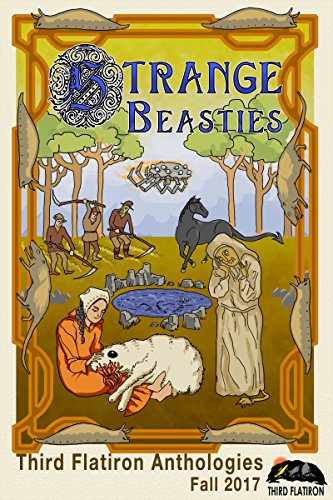
I'm pleased to announce that my story The Black Horse is to appear in the forthcoming Third Flatiron anthology Strange Beasties, out later this month. The anthology is available for pre-order on Amazon.

I love writing about the legends of localities where I've lived or which I know well. This is a tale of the North Yorkshire Moors in the late eighteenth century.

All the village names of this part of the world still bring nostalgia for my university years when a group of us made regular trips to attempt The Lyke Wake Walk.

It's also a tale of horse racing and of course I've done a fair bit of that too, so I feel on safe ground here, which is more than can be said for the story's protagonist!

This is my second sale to Third Flatiron. Some readers may recall that the first, Time's Winged Chariot, subsequently did well in a reader poll, so we'll hope the new story will enjoy similar success.

Friday, 1 September 2017

Third & Starlight!


An anthology of 14 tales of wonder by award winning authors, finalists, and semi-finalists (e.g. Writers of the Future, Hugo, Cambell, Aurealis, and others). This year's collection of science fiction and fantasy stories from these impressive new talents:

TABLE OF CONTENTS

Introduction: Back and Foreword----------- Robert B. Finegold, MD
The Memory of Huckleberries -------------- Rebecca Birch
The Temptation of Father Francis ----------Nick T. Chan and Jennifer Campbell-Hicks

The Waiting Room ------------------  Philip Brian Hall

Last Time For Everything -------------------- K. L. Schwengel
Skinners ----------------------------------------  Rachelle Harp
Amma's Wishes -------------------------------  M. E. Garber
Three Flash ------------------------------------  Dustin Adams
A Green Tongue ------------------------------   Frank Dutkiewicz
A Matter For Interpretation -----------------   M. Elizabeth Ticknor
The Root Bridges of Haemae --------------- Sean Monaghan
Red is the Color of My True Love's Hair -- William R. D. Wood
Bad Actors -------------------------------------   Julie Frost
In the Heart of the Flesh --------------------   Scott Parkin
Shattered Vessels -----------------------------  Kary English and Robert B.Finegold, MD

Wednesday, 30 August 2017

Ancient Greek Horses

Most of us are familiar with ancient Greek sculptures of the human body, but here's another example of how brilliantly they observed the equine form. This is a relief funerary sculpture, photographed in the Archaeological Museum of Athens, of a caparisoned horse and his handler.

Now if he were my horse I should not be keen on the handler raising his whip-hand in this way, but it is of course possible that we are looking at a chariot horse being trained for battle. He is not saddled and the caparison bears some sort of emblem at the front.

Notice the detail extends to individual muscles and small blood vessels. There is even a small crack in the right fore hoof!

Unless the handler is very diminutive we are looking at a stallion of impressive size for the period too.

Next is a life size bronze of a horse and juvenile jockey. The statue was recovered in pieces from a shipwreck off Cape Artemision in Euboea.

The jockey would have held the reins in his left hand and a whip in the right. These were probably of less durable material and have not survived immersion.

Notice the boy has no stirrups. There is some evidence to suggest that these were not invented until the early Middle Ages. Of course he has no saddle either and they were used by cavalrymen in antiquity. The lack of a saddle would have been a device to save weight,as would the youth of the jockey.

The piece dates from about 140 BC. Oh yes it does.


Recovered here are the metal parts of a real brute of a bit. Notice the shaped bars to prevent it pulling through the mouth and the particularly fierce wheels and serrations of the mouthpiece itself.

If the horse in the first picture had one of these in its mouth I can imagine why he's throwing up his head. Again, I suspect this can only have been battle harness, when instant obedience would be required from the mount and you might actually want him to rear. It's hard to imagine why you would need something like this in normal circumstances.

Monday, 28 August 2017

Iron Hail

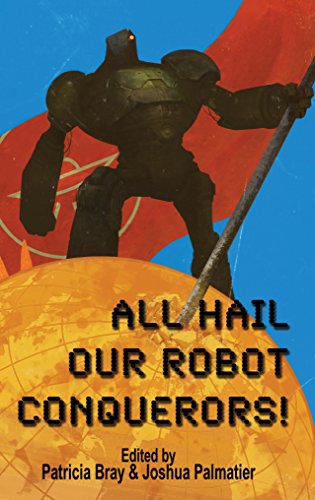
I'm very pleased to report that my short story Iron Hail is included in the Zombies Need Brains anthology All Hail Our Robot Conquerors. This is available now for pre-order on Amazon and due for release on Friday 1st September.

 RRRAWRRR!!! ZZZZZZTTTTT!!! ZZZZAAAAPPPPP!!!

The robots of the 50s and 60s science fiction movies and novels captured our hearts and our imaginations. Their clunky, bulbous bodies with their clear domed heads, whirling antennae, and randomly flashing lights staggered ponderously across the screen and page and into our souls—whether as a constant companion or as the invading army threatening to exterminate our world. We can never return to that innocent time, where the robots could be identified by their burning red eyes or our trusty robot sidekick would warn us instantly of danger— Or can we?

With a touch of nostalgia and a little tongue-in-cheek humor, here are fifteen stories from today’s leading science fiction and fantasy authors that take us back to the time of evil robot overlords, invading armies, and not-quite-trustworthy mechanical companions. Join Julie E. Czerneda, Brandon Daubs, Tanya Huff, Brian Trent, L.E. Modesitt, Jr., Jason Palmatier, Jez Patterson, Gini Koch, Lauren Fox, Sharon Lee & Steve Miller, Philip Brian Hall, Rosemary Edghill, R. Overwater, Helen French, and Seanan McGuire as we step into the future with a nod to the past. Hold on to those stun guns. You may need them!

Thursday, 24 August 2017

Heavy Weather

I'm delighted to announce that my short story 'Heavy Weather' has been accepted for the forthcoming Flame Tree Publishing anthology 'Pirates and Ghosts'.

Some of my readers will know of my enthusiasm for sailing ships, and of course I'm not long back from a cruise aboard the lovely barquentine Star Flyer.

Having been, since my youth a voracious reader of nautical tales, it seems I might be able to write them too. You may remember the first podcast of my work a year or so ago when Gallery of Curiosities put out 'Last of the Spice Schooners'.

Flame Tree do produce the most beautiful hardbacks and their lovely volumes intersperse classic authors with newer names. This volume includes work by Joseph Conrad, James Fenimore Cooper, Stephen Crane, F. Marion Crawford, Arthur Conan Doyle, William Hope Hodgson, Homer, W.W. Jacobs, Rudyard Kipling, Vernon Lee, H.P. Lovecraft, Richard Middleton, Edgar Allan Poe, Robert Louis Stevenson, and  H.G. Wells.

Tuesday, 22 August 2017

This year's butterflies

I wouldn't normally find the appearance of a Red Admiral butterfly (Vanessa atalanta) all that remarkable. On Sliabh Mannan these butterflies are usually relatively common but have been scarce this year. Peacock, likewise usually relatively common, have been almost completely absent.

I suspect the lengthy period of significant summer rain has been too much for some of the larger species. Quite often the butterflies I've seen have been short of bits of wing.

This specimen however was particularly bright and may well have been recently-emerged. I wonder if there might yet be a late-season surge?

By contrast Orange Tip in the late Spring, Ringlet in early summer and Green Veined White much of the time have been abundant, and a Painted Lady, not seen for years, did appear in the garden. Their periods of emergence were marked by more clement weather.

Friday, 18 August 2017

Getting at the truth

Julian the Apostate
We all think we know the meaning of the word truth. We all think that, if asked, we can give examples of it. We might even call these examples things we know (for sure).

Yet philosophers have written volumes attempting to define truth. If it’s so simple that everybody knows what it means, what did they find to write about?

My own ideas of truth were probably most profoundly influenced by Bernard Williams. He suggested the first issue for us to resolve must be whether truth is external or internal to ourselves. Is it something out there, waiting for us to recognize it, or is it something in our own heads?

If it’s the latter, then is there anything to stop what’s in my head (my truth) from being different from what’s in yours (your truth)? Might there be as many truths as people? Wouldn’t that be effectively the same as truth not existing at all?

If truth is external, then how did ‘what’s out there’ get into my head? How reliable is the perceptual mechanism that put it there?

The problem here is that we don’t have direct access to the outside world. We perceive by way of senses that are specific to ourselves and yield data relative to ourselves. That’s a good thing. It’s best that I should perceive, say, threats to myself in the most direct way possible. If a charging rhino’s fifty feet away from me, I’d quite like to know about it, and only it, rather than be provided with a total world picture.

The drawback to this system is, we can’t see anything absolutely. Our brains have become expert at deducing what absolutes must be there in order for them to receive the relative impressions they do, and most of the time they’re right, but not always. We may greet a friend in the street, say, only to find when he turns around that it’s not actually him. In other words, we all make mistakes.

Our brains use not only sensory inputs, sight, sound, touch, taste and smell, but also our own experiences and our cultural upbringing in order to make sense of the world and produce the perceptions they register. No two people therefore will have identical perceptions of anything, but similar people from similar backgrounds will have perceptions that overlap a lot, sufficiently for us to call that overlap truth.

It is however important to remember the relative nature of that overlap. Our truth describes the world as seen by people like us. There are alternative truths out there. It is not the case that everyone who disagrees with us is a fool, a rogue, or lying.

We are all rational people, aren’t we? We aren’t going to change our own notion of the truth because someone shouts at us, calls us rude names, or blocks us on Facebook. We’re stubborn, so that sort of thing only confirms our belief we’re right. The only thing that will persuade us we’re wrong is evidence. Like when the person who’s not the friend we think he is actually turns round.

So why oh why do some people apparently think other people will change their minds in response to abuse, threats, no-platforming or anything else except evidence and reason?

Phantaxis - Free Today until Sunday

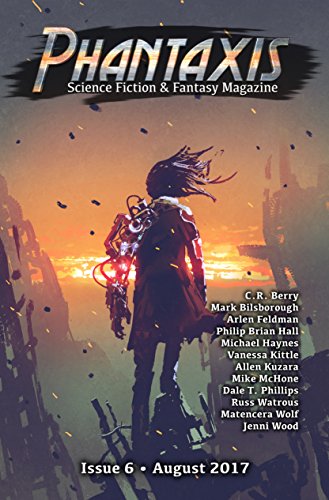
A reminder that the digital version of Phantaxis' August edition is available for free download from today until Sunday.


My story is called The Ship of Theseus. I hope you enjoy it.


Thursday, 17 August 2017

Venice by Night Again!

Showing the value of feedback, I'm republishing my four views from Ponte degli Scalzi with a little post-processing courtesy of the freely-downloadable GIMP graphics program. These versions are much brighter and more contrast-enhanced than the orginals. On the other hand they're less dark and mysterious. I'd beinterested to know what you think.

f4.6


f11