I'm delighted to announce my third acceptance from Flame Tree, this time for their forthcoming 'Cosy Crime' anthology.
My story is called 'Sir Robert's Gargoyle'. It is a mystery set in and around an English cathedral, where during the Civil War in the seventeenth century the church silver disappeared and was never recovered. An unlikely modern sleuth sets out on the trail of the loot. I do hope you will like it.
Cosy Crime is scheduled for a January release. The contents include:
Honey of a Jam by Stephanie Bedwell-Grime
Longfellow's Private Detection Service by Joshua Boyce
Peppermint Tea by Sarah Holly Bryant
Eykiltimac Stump Acres by Jeffrey B. Burton
Death in Lively by C.B. Channell
The Body in Beaver Woods by Gregory Von Dare
The Glorious Pudge by Amanda C. Davis
Twenty Column Inches by Michael Martin Garrett
Sir Robert's Gargoyle by Philip Brian Hall
Open House by E.E. King
The Whittaker-Chambers Method; Or, Mulligan’s Last Mystery by Tom Mead
Scoop! by Trixie Nisbet
The I's Have It by Annette Siketa
Murder on the Lunar Commute by B. David Spicer
Just the Fax by Nancy Sweetland
Raven Nevermore by Louise Taylor
A Mouthful of Murder by Elise Warner
These contemporary authors will appear alongside the following classic and essential writers: Arnold Bennett, Ernest Bramah, Anton Chekhov, Arthur Conan Doyle, Andrew Forrester, R. Austin Freeman, Anna Katherine Green, Maurice Leblanc, Arthur Morrison, Baroness Orczy, Catherine Louisa Pirkis, Edgar Wallace, Israel Zangwill, G.K. Chesterton.
Saturday, 15 September 2018
Sunday, 9 September 2018
Is it more important for Scotland to be in the EU or the UK?
The question begged here is more significant than the question asked, isn’t it? Could an independent Scotland get into the EU? There are several reasons why it might not, and all of these have been rehearsed ad nauseam. Is it worth going over them yet one more time? Probably not. It’s a complete dialogue of the deaf. Essentially it boils down to a disagreement between SNP supporters (who see no obstacle to anything) and unionists (who see obstacles to everything.)
Realistically, it seems far from certain that the option assumed in the question is actually available just for the choosing, especially in the short term. Pragmatically, an independent Scotland must be prepared for membership of neither union.
Perhaps we could look at the people involved instead of the economics. Scotland’s current residents include around 475,000 British nationals from other parts of the UK. Meanwhile, about 720,000 Scots live elsewhere in the UK. Intermarriage for 300 years has produced a very large number of people of mixed Scottish/other-British heritage and today’s British families (including my own) can comprise persons born on different sides of the border.
All of a sudden upon independence, a million and a quarter people would find they no-longer lived in their own country. One of them would be me. Personally, I find the prospect devastating.
Neither group of ‘exiles’ could be deprived of their present nationality against their will. An independent Scotland can offer Scottish nationality to non-Scots-born residents of Scotland, or possibly to Scots-born residents of the rest of the UK, but it cannot force it upon them.
In fact, it must be legally dubious whether a Scottish government could even force nationality change on Scots-born unionists. In the short term at least, a British passport is likely to be more valuable to travellers than a Scottish one.
It is therefore not beyond the bounds of possibility, in the event of a narrow vote in favour of independence, that the subsequent Scottish population would be almost equally divided between Scots and resident aliens.
We’ve recently had cause to notice how well the dividing of a population almost equally across passionately-felt identity lines has gone, I guess?
Wednesday, 15 August 2018
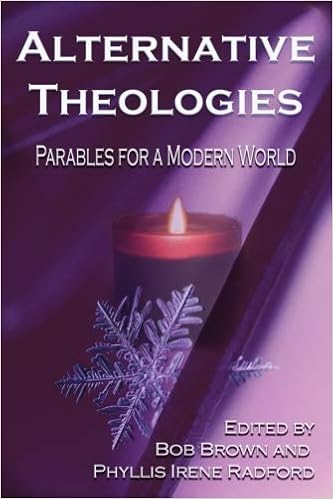
Alternative Theologies
My story 'Devine Justice' is included in the latest of the B-Cubed anthologies Alternative Theologies.
I'm delighted to share the table of contents with these notable authors and I do hope people will enjoy reading the book.
We hear quite a bit about alternative comedy, alternative history and so on these days. I've not previously come across a publisher willing to take the spirit of adventure into this sensitive but vital area.
Religion cannot be excluded from the remit of free speech. Even what we believe to be true must be examined and tested. It is impossible to prove that truth is false, yet it is so easy for an unexamined truth to degenerate into a dead letter and meaningless recitation.
This is why genuine religious philosophers always welcome rational challenges. Those who permit no discussion serve neither their own interests nor the interests of the truth.
Anyway, my story examines what happens when a defence attorney who is a master of sophistry and rhetoric faces his sternest test: his own trial on charges of breaking the laws of God. I'm very fond of this tale and I hope you'll all like it.
Friday, 27 July 2018
Tired old Propaganda
I studied economics at Oxford, taught it, helped introduce management science as a secondary school subject in Scotland and subsequently examined it.
However, there are considerably more eminent economists than me who support Brexit. Perhaps I might pray in aid the 2017 report by Patrick Minford, Professor of Economics at Cardiff University and Roger Bootle, Chairman of Capital Economics, Europe’s largest macroeconomics consultancy, among others. The group included six former economic advisers to government and eight university professors.
“Brexit could boost the UK economy by as much as £135 billion a year...it is time to abandon the gloomy forecasts of Project Fear and embrace Project Prosperity – the mounting evidence that quitting the protectionist EU will transform Britain’s prospects over the next decade.”
Now you may not agree with the distinguished authors of this report, but isn’t it about time to ditch the tired old propaganda campaign that Brexit is exclusively the province of the ignorant? Rational discussion is not aided by abusing those who don’t agree with you, nor by hysterical prophecies of cataclysm.
It simply is not the case that all the evidence points one way. As Spinoza pointed out, it depends on the colour of the glass through which you view it in the first place. In this case, also, there is a decision to be made on the balance of probabilities and of risk versus reward.
Even if majority opinion amongst certain groups did point one way it’s not much of a guarantee. I’ve been here before, being called a xenophobe and a fool almost two decades ago, when I was one of the relatively few economists who held that the UK should not join the Euro because it was unsoundly structured, would not work properly and would damage several European economies severely. Strangely enough, nowadays I find far more people who remember agreeing with me back then than I ever noticed at the time.
Wednesday, 18 July 2018
The working class vote
Some (mercifully not all) Remainers keep on and on about polls showing them to be better educated than Leavers. Apparently, this proves that all you need is a good education and you immediately see the virtues of the EU. In my opinion, this judgement contains more than a whiff of condescension.
Since I’m no longer young, my views are, of course, worthless anyway, but back in the day, I did win an open scholarship that took me from a Sheffield Council estate to Oxford University. So here’s a small thought from the graveyard’s anteroom.
When I took “A” Level, about 8-10% of 200,000 candidates obtained grade A. Today about 25% of over 800,000 candidates obtain grade A. In the mid 20th century under 20,000 UK students per year were awarded degrees; in 2010 over 330,000 students were awarded degrees.
I, therefore, very tentatively, propose an alternative explanation for the correlation between an extended modern education and voting Remain.
The vast expansion of university places in the UK over relatively recent years produced both a significant reduction in average undergraduate standard and a much greater exposure of young people to the ‘progressive’ views that enjoy dominance among younger academic staff.
I am far from convinced that a mediocre graduate is intrinsically more qualified to pronounce on this question than an expert plumber who left school at sixteen.
It so happened I was born with a good brain. I did nothing to earn that, and whenever I get too proud of what I’ve achieved or too downhearted over my failures, I remember the folk whence I came and remind myself that but for good fortune I’d probably have had far fewer opportunities to make such lifestyle choices, right or wrong, anyway. I should have been amongst the thousands of ordinary working people who lost their livelihoods with the collapse of the steel and cutlery industries and had to struggle so very hard to bring their city back to life again.
I cannot speak for them; I realise that. I am too far away from them now, in both time and distance. But I know one thing for certain. They are good people. They are sensible people. They know a great many things about life that you need no academic qualifications to know. They are as entitled to their view of how the EU affects them as any southern banker or stockbroker.
Not many people have been privileged to enjoy the sort of education I have. But neither I, nor anyone else, has earned the right to patronise the working class who voted Leave.
Labels:
education,
EU referendum,
graduates,
working class
Saturday, 14 July 2018
Free Trade versus Protectionism
Any set of circumstances will advantage some and disadvantage others, likewise any changes in circumstances. We can always find examples of those who are disadvantaged by change, but we do not, if we are wise, attempt to ban the development of motor cars in order to protect the livelihoods of stablemen and wagon builders.
Protectionism is in no-one’s long-term interest. Even when it is the collective protectionism of a number of advanced economies it is ultimately damaging to the optimum allocation of resources and hence to standards of living. Free trade with as much of the world as possible is in the UK’s best interest.
Right now the EU’s protectionism does temporarily benefit some producers but most of them are not in the UK. This is why, as a mainly service-based economy, we buy manufactures and agricultural products expensively from the EU instead of cheaply elsewhere and have a major trade deficit with the EU which does not reciprocate with a genuinely-free market in services.
Already the EU accounts for a rapidly diminishing minority of our trade. We enjoy a surplus in our growing trade with the rest of the world. The EU is slow-growing by world standards. Can anyone explain why it is sensible on a macroeconomic basis to remain tied to the shrinking, deficit-returning section of our trade to the disadvantage of the growing, surplus-returning section? President Trump, for example, has correctly highlighted the problems the Chequers proposals present for a trade agreement with the USA, our largest single market.
The point is that tariffs, in general, are not very important today as barriers to trade, though there are always specific exceptions to the rule of course. However non-tariff barriers are important and it is this which is at the heart of the EU’s protectionism. The EU rulebook is process-driven, not standards-driven. In other words, it is backward-looking and hostile to innovation. Such rulebooks can never keep up with technology and in the EU’s case are actively pressed to resist change by reactionary lobbyists.
The negotiations with the EU have long since passed the point where a deal could be mutually advantageous. It’s now all about preserving the EU by holding back the progress which the UK would be able to show once freed from the shackles. It is not in the UK’s interest to pursue the Chequers proposals or anything likely to flow from them.
Protectionism always has its advocates because it can yield temporary political gains to the protector. Free trade, by contrast, can yield mutual economic benefits to all participants. We will get good deals because it’s in the interests of other countries to give us good deals. It would even be in the interests of the EU, except that they prefer to protect their federalist agenda over their citizens’ welfare.
Remember that the UK is a service-based economy and the EU 27 are mostly not. The EU has been spectacularly unsuccessful in negotiating service trade deals, probably because its negotiators neither understand nor care what is needed. Switzerland etc. do perfectly well as standalone negotiators. This is because they do understand the needs of service-based economies, i.e. their own! The UK is the world’s sixth economy. Why can we not do what these other independent countries can do?
Labels:
Chequers proposals,
EU,
free trade,
protection
Tuesday, 10 July 2018
The wicked flee where no man pursueth
The Prime Minister’s latest Brexit proposal is already well on the way to Brexit In Name Only and, by the time Brussels has finished demanding even more concessions and the government has finished rolling over, the UK is likely to be in the limbo I have consistently described as the worst of all possible worlds.
Let us be clear: BRINO is not only worse than Brexit it is worse than Remain. The future envisaged by the Chequers proposals appears to be a UK permanently held hostage in the EU’s anteroom. We shall be obliged to accept all rules on goods etc. without any say in drawing them up. In practice, we shall have to implement the ECJ’s decisions on those rules. We shall lack the flexibility to foster innovation in new industries such as biotechnology, where we have a comparative advantage. We shall not be able to negotiate any goods trade deals with third parties that depart from EU rules; hence it seems unlikely that we shall be able to agree a deal with the USA, our largest single market. We shall be obliged to accept a permanent deficit with the EU in goods trade.
For the privilege of this absurdly disadvantageous arrangement, we shall pay the EU £37 billion pounds. By the end of the negotiations, I don’t doubt we shall also be paying annual fees too, so the point of making a divorce settlement payment at all escapes me utterly.
Meanwhile, Brussels will ensure that we cannot participate in any of the ongoing EU projects such as Galileo, though, in a magnanimous gesture, they will allow us to continue paying for them in our settlement bill.
Any sensible government would have held off triggering article 50 until it was sure that preparations for ‘no deal’ could be completed in two years. This government has allowed itself to be backed into a corner by assuming goodwill on the part of the EU, even when it was evident that none was forthcoming. Failure to plan for ‘no deal’ fatally undermined the UK negotiating position. The nearer the deadline approached without any plan for ‘no deal’, the more obvious it became in Brussels that the UK would take any (bad) deal rather than ‘no deal’.
The arrangement now proposed is so bad that one is tempted to suspect it was never the intention to allow Brexit actually to take place. If you had set out to secure the worst possible deal you could scarcely have done a better job.
I now suspect a second referendum was refused not because the establishment expected a different answer but because it feared the same answer. A confirmation of the public’s desire for Brexit would have made it that much harder to deliver the non-Brexit-dressed-up-as-Brexit which we now see is intended.
Naive ingenu that I am, I actually trusted the official government statement that the government would implement what the electorate decided. I should have known better. It was, after all, a promise made by politicians.
Truly, the wicked flee where no man pursueth. The pass defending UK democracy has been yielded without a struggle.
Labels:
Brexit,
Brexit in Name Only,
Chequers,
Prime Minister
Friday, 6 July 2018
The Douro
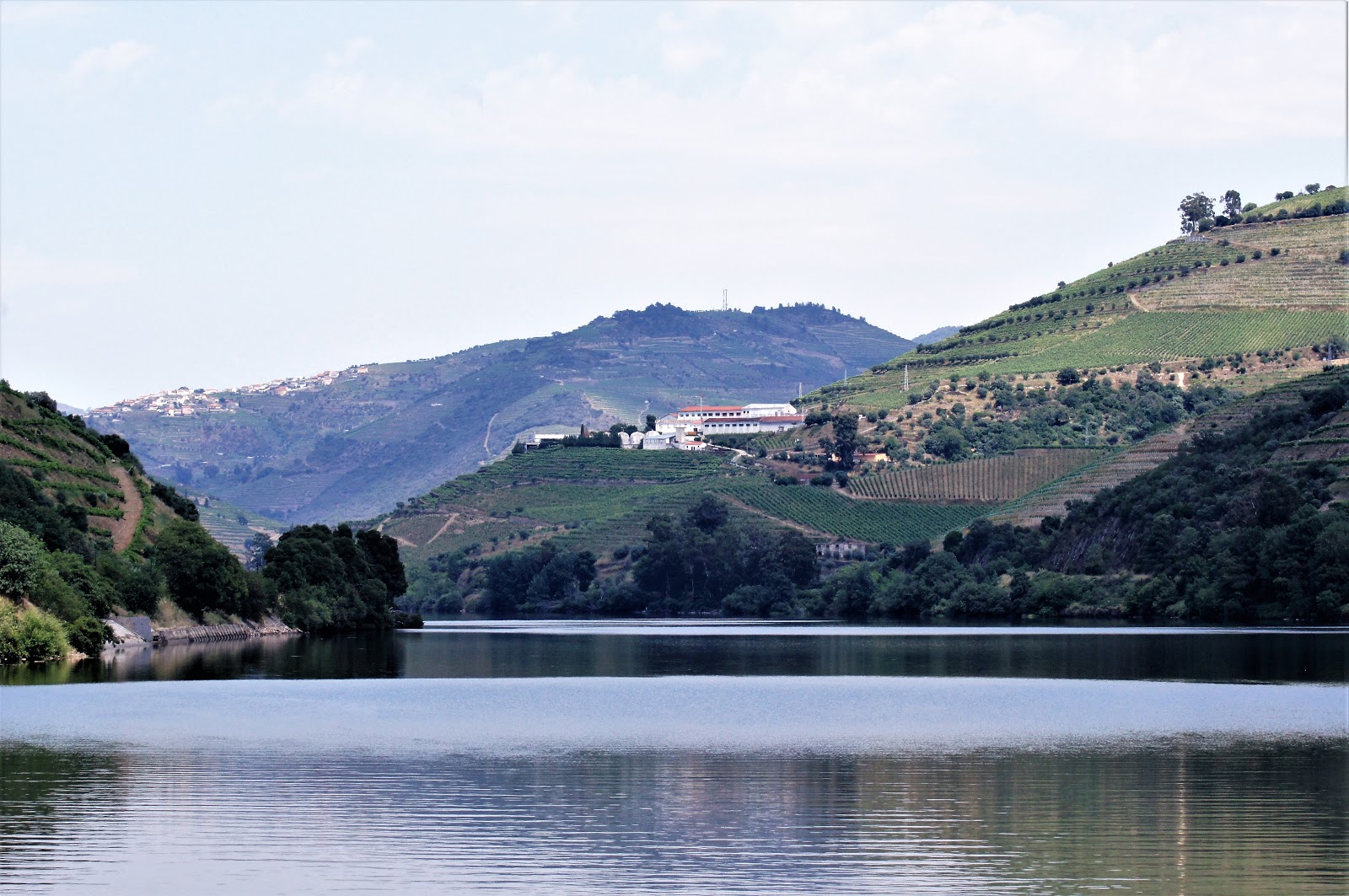
The Douro is the third longest river in the Iberian peninsula and for seventy miles it winds through narrow canyons, demarcating the border between Spain and Portugal.
The entire Portuguese length of the river is now navigable, from Vila Nova de Gaia, at the estuary mouth opposite, Porto to the confluence with the River Agueda at the Spanish border. To make navigation possible many miles of artificial banks and five enormous dams / locks have been constructed. Carrapatelo, the largest of these locks, involves a single lift / drop of 114 feet.
Vessels of up to 272 feet long and 37 feet wide can pass these locks and entertaining cruises of one to two weeks can be arranged along the river. The ship on which we travelled, the Douro Elegance is only a year old and offers luxurious accommodation and facilities aboard.
The Douro has the world’s oldest demarcated wine producing area, as well as numerous groves of olives and almonds clinging to the rocky slopes on either bank. The quintas or wine estates are the centre of Port wine production.
Here, the shallow, rocky schist soil of the steep hillsides retains the day’s heat and radiates it back to the vines at night, preserving an even temperature. It also stresses the vines, forcing their roots deep and encouraging the production of grapes rather than excessive leaf.
I have to confess I was not previously aware of the existence of white port, which is a sweet aperitif. Ruby and tawny varieties of port I had encountered, but I was surprised to learn that only certain exceptional years are designated vintage and carry the date of the harvest. There are only one or two per decade. For other years the crucial thing is how long the wine matures in oak barrels (longer for tawny than ruby) and what year bottling takes place. Worth noting is that ten year old tawny is always ten years old, no matter how long you keep it in your cellar.
Wednesday, 4 July 2018
Griffon Vulture
Weighing up to 25 lb, and with a wingspan of 8 or 9 feet, the Eurasian Griffon (Gyps fulvus) is an inhabitant of crags such as these near Castelo Rodrigo in Portugal.
We were lucky enough to see both these birds and some Egyptian vultures (Neophron percnopterus), on our way back from visiting the fortified village itself.
Unfortunately, it took me a while to figure out how to photograph them properly and the Egyptians were gone by the time I achieved some degree of competence.
This is the first report from our holiday in Portugal. We had some problems in getting there, but once we finally caught up with the ship, almost a day late, we had a great time cruising the Douro and later in Lisbon.
More reports to follow.
Labels:
Castelo Rodrigo,
Eguyptian vulture,
Eurasian Griffon,
Griffon,
Portugal,
vulture
Friday, 15 June 2018
Accepting democracy
Most remainers have accepted the result of the 2016 referendum. A smaller number are stuck in reinterpretative mode, finding ever more ingenious reasons to argue that the vote to ‘leave’ need not necessarily mean ‘leave’. Some are in a party-political opportunistic mode and a politically well-placed few are in an implacably-determined obstructive mode, discounting the danger to democracy this represents.
However, I think it’s unlikely they'll accept they made the wrong call on this question. Even years of successful trade outside the EU may not sway them.
I understand this since I should have been similarly appalled had the result of the Scottish referendum gone the other way. I should have conceded the right of the majority to take Scotland in the direction they chose. I should not have conceded their right to take me with them. I was born British and I shall die British. Although resident in Scotland, married to a Scot and possessed of a better knowledge of Scotland’s history and economy than most, I shall not give up British nationality and adopt Scottish. Nor can I be compelled to do so, even if my homeland is dragged out from under my feet and I unwillingly become a sojourner in a foreign country.
This implies no disrespect towards those of a contrary opinion. They have their view and I have mine. I trust they will respect my right to my judgement as I respect theirs. A minority won’t, of course. Fortunately, the Good Friday Agreement provides a precedent on the nationality issue.
I suspect many remainers feel similarly about the EU, though some, sadly, have shown disrespect towards Brexit voters they consider less wise than themselves. This is regrettable. Ordinary working people, the folk whence I came, are as competent as bankers and businessmen to judge the EU’s impact on their own lives.
In modern identity politics, fundamental principles of a democratic society such as freedom of speech are well on the way to being lost. We howl down opponents or endeavour to silence them with pejorative labels. We deny platforms to peaceful political nonconformists.
We should hardly be surprised therefore if some are unwilling to concede their fellow citizens the right to disagree on Brexit. From those who do accept that right, however, a little more overt respect for it would help towards the necessary national reconciliation.
Labels:
EU referendum,
independence,
Remainers,
Scottish referendum
Sunday, 3 June 2018
The Eleventh Commandment
This is my first published crime story without any Science Fiction story without and science fiction or fantasy elements. However, given that crime sells better than SciFi, maybe that's a move in the right direction, you never know.
Just to reassure any readers keen to see my latest SF, I am still working on trying to get more of them into print - about forty more to be exact. One acceptance has been awaiting publication for so long I've almost forgotten about it myself!
Sunday, 20 May 2018
Why is Brexit taking so long?
1. Appalled by the prospect of losing its second largest contributor, the EU bureaucracy is being as obstructive as possible. The objective is to extract from the UK as much money as possible for as long as possible whilst simultaneously persuading UK citizens that you cannot rush complicated negotiations and no daylight robbery is involved.
2. When a political revolution has been effected democratically, the necessary counter-revolution takes some time. The ruling establishment cannot just reverse the popular decision overnight; even the famously phlegmatic British might take umbrage at that. Therefore the establishment agree with Brussels that the process is fiendishly complicated and they try to achieve by delay what they could not achieve by persuasion. Their objective is to wear down the popular will simply by monotonous repetition of the same difficulties.
As evidence of this, notice the change that has come over the two negotiating principles enunciated by the PM. These began as:
a) Brexit means Brexit.
b) No deal is better than a bad deal.
So far as one can judge the present wording is:
c) Brexit means Remain in limbo indefinitely.
d) Any deal, even a rotten one, is better than no deal.
Anyone who has ever negotiated anything knows you must preserve the option of walking away. If your opponent knows you cannot or will not do that then you will either lose or the negotiations will go on for ever.
Either of which, by coincidence, suits Brussels (see point 1 above). The very idea of allowing them to decide when the UK has arrived at a satisfactory solution to the EU’s currently-contrived obstacles-in-chief would be derisory if it were not actually happening.
And by coincidence indefinite postponement is also what our establishment want (see point 2 above).
Therefore the answer to the question is, if you think you’re seeing delaying tactics you ain’t seen nothing yet.
Saturday, 5 May 2018
How About a Leave Folk Song?
(To the tune Ilkla Moor Baht 'At)
Tha’s bin an’ voted fer Remain.
What does tha use f’ra brain?
Tha’s bin an’ voted fer Remain.
Thar vote ‘as gone reyt down t’drain!
Cos all us voted Leave,
In UK we believe,
All us ‘oo voted Leave!
Tha wants ter stay in t’ single mart.
Tha knows that’s not too smart.
Tha wants ter stay in t’ single mart.
Tha’s got thy ‘orse afore thy cart!
Cos all us voted Leave,
In UK we believe,
All us ‘oo voted Leave!
Tha wants ter stay in t’ customs pot.
Protectin’ what we’ve got.
Tha wants ter stay in t’ customs pot.
When outside it t’ wide world’s got all t’ lot!
Cos all us voted Leave,
In UK we believe,
All us ‘oo voted Leave!
We that are island born and bred
Can’t lie in port no more ‘n lie in bed.
We that are island born and bred
Must look to t’open sea instead!
Cos all us voted Leave,
In UK we believe,
All us ‘oo voted Leave!
Tuesday, 1 May 2018
Remain Campaign Is Really Quite A Pain
Unreconciled Remainers continue to campaign for further parliamentary votes on Brexit. They know parliament is, for historical party-political reasons, overwhelmingly dominated by Remainers and not representative of the popular will as demonstrated in the referendum. They hope MPs who stood for election in 2017 on a manifesto of implementing Brexit may yet renege.
By a series of scandals in recent years our parliamentarians have greatly lowered their standing in the eyes of the public. But things could get worse. Having themselves decided to put the Brexit issue to the people, if they now wrest back control because the people gave them the wrong answer they will damage parliament’s reputation and standing beyond recovery.
It’s easy to forget the roots of our democracy are shallow. The UK has not always been democratic; in fact we’re still in our first century of universal equal suffrage.
As it happens I myself, though quite well-stricken in years and despite having cast my vote on every occasion I was able, have never so much as helped elect a constituency MP. I share this distinction with many others, I’m sure, because the UK constitution does not require a majority vote to elect an MP or a government.
Since The Second World War, only the 2010-15 coalition government has ever achieved the degree of support at the polls achieved by ‘Leave’ in the 2016 referendum. Strangely enough the right of the other, inadequately-supported, governments to govern was not questioned. Yet the contempt expressed for the much more convincing Brexit vote recalls the horror with which the 19th century ruling elite responded to the first proposed expansions of the franchise.
Look, I taught philosophy for a couple of decades. I prided myself on being able to argue either side of any question, whichever was needed in order to counter the prejudices with which my students arrived in the classroom. My objective was to get them thinking rationally rather than simply asserting their viewpoint. Arguing for a side you don’t actually support is quite good practice in understanding other people.
Yet in respect of Brexit on Quora I’m constantly bombarded by belligerent, expletive-laden certainties of what is right for my country and wrong about my own views from people who admit not so much as a scintilla of personal doubt, let alone the possibility of a rational alternative. Disagreement is, it seems, simply unacceptable.
All I can say is, some people evidently possess the gifts of clairvoyance and prophecy. I don’t. I have to muddle along with an M.A. from Oxford University, the experience of working through a couple of U.N. General Assemblies and a few decades spent trying to make sense of economics. Maybe that doesn’t qualify me to form an opinion, but it seems to me not unreasonable that it should.
Any number of superficially-plausible reasons have been put forward to justify trying to overturn the referendum result, but in the end only one thing matters: such a precedent, once set, cannot be unset.
And the alternatives to democracy aren’t very nice.
Wednesday, 18 April 2018
Song Thrush on Sliabh Mannan
One year I remember spotting a single redwing (Turdus iliacus) and I half remember a possible fieldfare (Turdus pilaris), but both were fleeting glimspes and not seen again.
However in the last few years song thrushes (Turdus philomelos) have appeared in a cutting of the old Slamannan Railway which has now been converted into a path.
The sides of the cutting are quite steep and the old railway was a single track, so the cutting is effecively a narrow ravine which, although 600 feet above sea level, is sheltered from the worst of the strong winds which can sometimes blow across the moors. The price of shelter is that the sun only peers over the southern side of the cutting fairly late in the morning, but by spring the temperature is usually not too bad even in shade.
So I'm happy to see these recent arrivals settling in and I hope they'll stay around the area.
Labels:
blackbird,
song thrush,
Turdus merulus,
Turdus philomelos
Friday, 13 April 2018
United States of Europe?
A United States of Europe has been advocated for centuries as a means of preventing European War. Even after the US Civil War demonstrated that war between federated states was by no means impossible, prominent European figures continued to argue for such a project.
The devastating wars of the twentieth century gave fresh impetus to the idea, and in the 1940’s the federalists effectively gained the upper hand over those who favoured looser associations such as the Council of Europe and EFTA. Recognising however that their ideas were well ahead of European pubic opinion, they agreed to a step by step approach towards “ever closer union”. The most recent step was the Lisbon Treaty of 2007, which effectively reintroduced the previously down-voted European Constitution under another name. It is under Article 50 of this constitution that the UK is currently negotiating withdrawal from the EU. A number of notable politicians have endorsed a United States of Europe in recent years.
However recent years have also seen a significant push back against the centralising tendencies of the European Commission in particular. Heavily indebted members of the Eurozone have been forced to accept major deflationary measures despite consequent heavy unemployment and popular discontent. Migratory waves have placed the open borders Schengen system under intolerably heavy political strain. Nationalist political forces have grown stronger in various member states.
To all of this the Brussels answer is more Europe, not less. For example the single currency won’t work properly without a common fiscal policy and to save the single currency from the pressures it has come under we must therefore remove the individual fiscal freedom of member states. The absence of a popular will for this is not considered an obstacle.
To some, European federalism is yesterday’s answer to yesterday’s problems. Aloof, remote government is no longer acceptable to populations who, in the information age, are far more in touch with alternative thinking on how their needs may be met.
This is not to say that the ideal of fraternity is not a fine one. However, if fraternity is to be realised, ways need to be found of making it compatible with liberty and democracy.
Labels:
EU,
Euro,
Europe,
Schengen,
single currency,
United States of Europe
Wednesday, 4 April 2018
Why has Brexit proven to be so divisive?
Referendums are relatively recent innovations in the UK political system and we’re not really used
to them. They involve voters far more directly in political choices than do UK General Elections.
In the latter, because of our first past the post electoral system it is normal for the winning party to poll less than fifty percent of the vote; since the Second World War the only government backed by more than half the voters was the 2010-15 coalition and that involved two parties. Nevertheless, as long as a government can command a majority in the House of Commons no-one makes much of a fuss and it is allowed to enact radical policy changes such as nationalisation or privatisation, to change criminal and civil laws or indeed to sign foreign treaties such as the one which took the UK into the EEC in 1973.
Note that this acceptance of General Election results comes despite the fact that the majority of voters didn’t vote for the government, whereas in both the 1975 and 2016 EU referendums the majority of voters by definition did vote for the winning outcome.
Note also that all political parties can and regularly do make undeliverable promises and predictions during elections in an attempt to persuade voters to vote for them. To hear some of the post-referendum angst you would think no politician had ever misrepresented the facts before, whereas in fact it is the normal state of affairs and everybody knows it.
A General Election is a very blunt instrument, since countless issues may influence votes and campaigns are usually very diffuse affairs. A referendum by contrast focuses on a single issue which is itself resolved into a single yes/no question. It is a great deal easier to decide how to vote on a single issue than to balance up the various party policies with which you agree and disagree in order to decide which party overall is the best (or least evil). In spite of this no-one ever suggests it’s too difficult for the uneducated to work out how to vote in an election.
You perhaps begin to see that objections are made to the results of referendums which would rightly be considered absurd if made in the context of General Elections. Why is this? I suggest because emotions are much more thoroughly wound up by referendums.
The Scottish independence referendum was, for many who experienced it directly, a profoundly unpleasant and divisive process. It was, in the main, divisive because of the emotions that were in play, not because of disagreements about facts. However much we may rationalize our instinctive position, human beings are strongly driven by visceral loyalties. This quickly turns unlikely allies into ‘us’ while former friends may suddenly become ‘them’. When emotions are involved, rational dialogue flies out of the window and we may resort to strong language to describe people who disagree with us. This is reinforced by modern social media echo chambers in which we only talk to people who do agree with us, while the best we may manage with our opponents is to talk at them and shout louder and use more rude words if they don’t seem to listen. But in General and Scottish Elections there’s always a political choice available to the electorate between parties who do and don’t support independence. Not so with the EU.
By the 2016 EU Referendum, the electorate had been denied any say for over forty years as the EEC steadily morphed into the EU and the EU in turn began to transition towards federalism. All major UK parties supported EU membership. They mainly selected candidates who agreed with party policy; hence the House of Commons came to be dominated by those favouring membership. The UK government even signed a rebadged Lisbon Treaty without the promised referendum on the EU Constitution. In short, Eurosceptics never had a chance at any stage to record their objections to the changes in the EU. This built up a great deal of alienation.
So take the emotional and unusual environment of a referendum, heavily season with decades of denial of choice, mix well with issues of identity and democratic principles of self-government, throw in deliberate attempts to stir up emotions on all sides and don’t be surprised when you get bitter division. Naturally this division makes it much harder to accept the outcome of a referendum than the outcome of an election. Before you know it, the losers are demanding another one, just like Scotland.
I strongly believe that a European political class which had a better understanding of the people they governed could have avoided all this unpleasantness and found ways to head off the least desirable EU developments. But elites don’t tend to think that way.
Labels:
Brexit,
elections,
referendum,
Scottish independence
Tuesday, 3 April 2018
Did Scottish people originally come from Ireland?
Some of them did.
The name Scoti was originally a (4th century AD)Latin term for Gaels who raided Roman Britain from Ireland. By the 5th century these Gaels had formed a kingdom (Dalriada) which straddled the relatively narrow channel between north-eastern Ireland and south-western Scotland. However the country now known as Scotland was, in the Dark Ages, divided between these Gaels and several other races including Strathclyde Britons (Celts) forced north by the saxons(whilst other Celts remained in Wales and Cornwall), Norse moving south from Orkney and Shetland, Picts who occupied most of the central and northern highland areas and Angles moving north from Northumbria. A separate Viking group colonised Galloway. These disparate groups sometimes fought and sometimes didn’t.
Legend has it that in the mid-ninth century a Dalriadan king called Kenneth the Hardy was defeated in battle by the Picts, who were then attacked in the rear by a Viking army. The Vikings won, but as was their habit, then retired to the sea rather than holding the land. Kenneth’s army was now in better shape than the Picts and he was able to take over Pictish territory, becoming the first king of a united Alba (Dalriada + Pictland = just about all the mainland north of the highland line). Nowadays there is controversy about whether this amalgamation of the two kingdoms actually did occur by war or by dynastic marriage or some other process and not everyone considers Kenneth (MacAlpin) the first king of the unified land.
It took a lot longer for the lowlands (Strathclyde and the Lothians) to be incorporated into the kingdom and longer still for the Norse settlements in the isles of the west and north to be included too. Long before this process was complete it was complicated by the arrival of Normans who had already conquered England and who also invaded Ireland.
In the 17th century the colonisation process was reversed as protestants from Scotland were settled in Gaelic Ulster, which had been difficult to govern from the British side of the water.
The famine of the 1840’s set off more emigration from Ireland and significant numbers came to Scotland in a second wave of Irish settlement. Many got no further than Glasgow and surrounding west coast towns, most engaging in manual labour in the newly expanding industries.
So whilst numerous Scots today are of Irish descent, many others are descended from the various races that were amalgamated into the kingdom. These various strands are nowadays thoroughly mixed together anyway.
Monday, 19 March 2018
The American Narrative of the War of Independence
On Quora, questions are frequently asked regarding what the UK thinks about the American Revolution. They always tend to get the same answer, which is, essentially, that the UK doesn't tthink about it at all. Although it is fundamental to US history, for the UK it was just a small sideshow in the war with France that was fought, on and off, for around eight centuries. The American colonies at that time had no great value.Various answers seem to want to re-fight the war. I don’t know why. But since I used to teach philosophy, here’s a philosophical answer. Or at least an attempt at one.
Firstly, there is a famous rule: the winners get to write the history.
When the winners do this, it’s very useful if they have a handy philosopher who can explain logically why everything they did was right and justified. For the American revolutionaries that philosopher was Thomas Paine. ‘Common Sense’ and others of his works are, I take it, the basis of what the questioners mean by The American narrative of the Revolutionary War.
“Without the pen of Paine, the sword of Washington would have been wielded in vain.” - John Adams.
The problem with being a revolutionary is that real life is rarely as simple as they like to believe. Quite often revolutionaries end up not all that different to those against whom they rebel. Arguably the newly-independent Americans were every bit as good at imperialism etc. as the British rulers they threw out. That is a matter for better historians of the period than me.
But the problem with Paine was, he applied the same inexorable logic to everything, exposing the failings of US society’s continuing shibboleths with the same acumen as he’d exposed the failings of past ones such as monarchy. Slavery? Contrary to the rights of man. Formal religion? Subordination to an unelected priesthood is no better than subordination to an unelected king. And so on and so forth.
A philosopher who previously supported you and now embarrasses you is a really annoying creature. If you can’t answer him, it’s best to ignore him altogether. When Paine, an important US Founding Father, died in New York no more than a dozen people attended his funeral.
So perhaps a question of more relevance today would be, how consistently did (and does) the USA apply the philosophy of the Revolutionary War?
Monday, 19 February 2018
Red Returns
Here is something I hope may be found an inspirational photograph.
Six months after a sustaining a life-threatening joint-puncture injury in a field accident, after an operation to flush infection etc. out of the wound, (including doubts as to whether he would ever walk out of the equine hospital), box rest, convalescence, field rest and so on, here is Red under saddle again for the first time.
Just five minutes walking around the manege to remind him he's a big strong horse who can still carry his rider easily.
He really loved being back. It's good for his ego and prestige in the herd; working horses automatically get extra kudos and license to show off.
Now fingers crossed for no adverse reaction!
Labels:
equine hospital,
equine injury,
horse,
Red,
vet
Subscribe to:
Posts (Atom)