Red is in the final week of convalescence. He is led out to the grass three times a day, both for the purpose of strengthening his fetlock by walking and readjusting his system to a grass diet.
So far this programme's progressing well, though the occasional 'whoopidoo!' bucks are becoming a bit difficult to hold on to. I'm not sure those were, strictly speaking, included in the schedule.
Anyway he stays out up to 30 minutes on at least one of these expeditions per day, weather and midges permitting.
I don't recall a year like this one for midges. Clouds of these annoying beasties are so thick you're almost lucky not to be breathing them in. I expect they'll persist until the frosts put a close to their activities.
On the other hand, once again it proved impossible to cut the winter field for hay, so when the herd moves across from the summer field they'll find the grass still thick, if reduced in nutrition because of the lateness of the season.
Meanwhile, in defiance of strict instructions that only one animal at a time is allowed to be sick, Mac the Dogue suffered a flare-up of infection in his damaged leg. (He has a bald patch resulting from an old operation scar, and since he is a very hashy-bashy-tearing-through-the- undergrowth animal he keeps scratching it.)
So he needed an emergency trip to the vet on Saturday. He's now progressing well on medication but hates having to wear a Buster collar to prevent him licking the wound.
Tuesday, 17 October 2017
Veterinary Bulletin
Labels:
Dogue de Bordeaux,
fetlock,
horse,
infection,
veterinary
Sunday, 24 September 2017
Equine Injury
This is Red, the current herd boss.
Unfortunately he doesn't look quite so spry at the moment because he picked up a puncture wound in a hind fetlock joint that somehow stove in a cubic centimetre of bone and then became infected.
Horse people will know that bad damage to a leg is potentially fatal to a horse. Fortunately we have reasonably locally the services of a first class equine specialist veterinary practice. They performed keyhole surgery to flush the infection.
After his period in hospital Red is now home again and on compulsory box rest because excessive activity with all that missing bone might set him back to square one.
Red hates this. During the day a rota of companions has been organised for him in our centrally-divided double stable. He's a good patient, all things considered, but he doesn't mind letting me know how displeased he is by a periodic ears back or a longing look at the field into which others are unfairly allowed.
He doesn't necessarily believe it's for his own good.
Kids, huh?
Unfortunately he doesn't look quite so spry at the moment because he picked up a puncture wound in a hind fetlock joint that somehow stove in a cubic centimetre of bone and then became infected.
Horse people will know that bad damage to a leg is potentially fatal to a horse. Fortunately we have reasonably locally the services of a first class equine specialist veterinary practice. They performed keyhole surgery to flush the infection.
After his period in hospital Red is now home again and on compulsory box rest because excessive activity with all that missing bone might set him back to square one.
Red hates this. During the day a rota of companions has been organised for him in our centrally-divided double stable. He's a good patient, all things considered, but he doesn't mind letting me know how displeased he is by a periodic ears back or a longing look at the field into which others are unfairly allowed.
He doesn't necessarily believe it's for his own good.
Kids, huh?
Labels:
box rest,
equine joint infection,
fetlock damage,
horse,
keyhole surgery,
Red
Wednesday, 13 September 2017
Horsepower
Appropriately enough, shortly before my story 'The Black Horse' is published in a few days' time, I was able to pay a visit to the Horsepower show at The Helix, Falkirk (above), home of the famous 'Kelpies' scuplture.
From the hugely popular pony rides to the vigorous re-enactment of fight scenes by Outlander stunt riders (left), there was something to interest spectators in a wide variety of non-competitive equestrian endeavour. The occasional shower failed to dampen the enthusiasm, though it probably added to the takings in the sales and refreshment tents.
Heavy horses were at work logging, pulling agricultural implements, and on the towpath of the Forth Clyde Canal (right).
The grand finale in the main ring was the hugely popular jousting tourney (below).
We have to remark that not every competitor displayed perfect chivalry. A certain amount of cheating seemed to be going on, none of which had the slightest connection with the large bag of gold allegedly deposited for safe keeping with the judge by the eventual victor.
A large crowd had a very good day. Many thanks to the organisers and participants who deserve much credit for ensuring everything went well.
Labels:
canal,
draught horses,
Falkirk.Kelpies,
heavy horses,
Horsepower show,
horses,
jousting,
Outlander,
riding,
stunt riders,
The Helix,
tournament,
tourney,
towpath
Saturday, 2 September 2017
The Black Horse
I'm pleased to announce that my story The Black Horse is to appear in the forthcoming Third Flatiron anthology Strange Beasties, out later this month. The anthology is available for pre-order on Amazon.
I love writing about the legends of localities where I've lived or which I know well. This is a tale of the North Yorkshire Moors in the late eighteenth century.
All the village names of this part of the world still bring nostalgia for my university years when a group of us made regular trips to attempt The Lyke Wake Walk.
It's also a tale of horse racing and of course I've done a fair bit of that too, so I feel on safe ground here, which is more than can be said for the story's protagonist!
This is my second sale to Third Flatiron. Some readers may recall that the first, Time's Winged Chariot, subsequently did well in a reader poll, so we'll hope the new story will enjoy similar success.
Labels:
Lyke Wake Walk,
North Yorkshire Moors,
Philip Brian Hall,
short story,
Strange Beasties,
The Black Horse,
Third Flatiron,
Time's Winged Chariot
Friday, 1 September 2017
Third & Starlight!
An anthology of 14 tales of wonder by award winning authors, finalists, and semi-finalists (e.g. Writers of the Future, Hugo, Cambell, Aurealis, and others). This year's collection of science fiction and fantasy stories from these impressive new talents:
TABLE OF CONTENTS
Introduction: Back and Foreword----------- Robert B. Finegold, MDThe Memory of Huckleberries -------------- Rebecca Birch
The Temptation of Father Francis ----------Nick T. Chan and Jennifer Campbell-Hicks
The Waiting Room ------------------ Philip Brian Hall
Last Time For Everything -------------------- K. L. SchwengelSkinners ---------------------------------------- Rachelle Harp
Amma's Wishes ------------------------------- M. E. Garber
Three Flash ------------------------------------ Dustin Adams
A Green Tongue ------------------------------ Frank Dutkiewicz
A Matter For Interpretation ----------------- M. Elizabeth Ticknor
The Root Bridges of Haemae --------------- Sean Monaghan
Red is the Color of My True Love's Hair -- William R. D. Wood
Bad Actors ------------------------------------- Julie Frost
In the Heart of the Flesh -------------------- Scott Parkin
Shattered Vessels ----------------------------- Kary English and Robert B.Finegold, MD
Labels:
3rd and Starlight,
anthology,
Jennifer Campbell-Hicks,
Kary English,
Nick T. Chan,
Philip Brian Hall,
Rebecca Birch,
Robert B. Finegold,
Scott Parkin,
short story
Wednesday, 30 August 2017
Ancient Greek Horses
Most of us are familiar with ancient Greek sculptures of the human body, but here's another example of how brilliantly they observed the equine form. This is a relief funerary sculpture, photographed in the Archaeological Museum of Athens, of a caparisoned horse and his handler.
Now if he were my horse I should not be keen on the handler raising his whip-hand in this way, but it is of course possible that we are looking at a chariot horse being trained for battle. He is not saddled and the caparison bears some sort of emblem at the front.
Notice the detail extends to individual muscles and small blood vessels. There is even a small crack in the right fore hoof!
Unless the handler is very diminutive we are looking at a stallion of impressive size for the period too.
Next is a life size bronze of a horse and juvenile jockey. The statue was recovered in pieces from a shipwreck off Cape Artemision in Euboea.
The jockey would have held the reins in his left hand and a whip in the right. These were probably of less durable material and have not survived immersion.
Notice the boy has no stirrups. There is some evidence to suggest that these were not invented until the early Middle Ages. Of course he has no saddle either and they were used by cavalrymen in antiquity. The lack of a saddle would have been a device to save weight,as would the youth of the jockey.
The piece dates from about 140 BC. Oh yes it does.
Recovered here are the metal parts of a real brute of a bit. Notice the shaped bars to prevent it pulling through the mouth and the particularly fierce wheels and serrations of the mouthpiece itself.
If the horse in the first picture had one of these in its mouth I can imagine why he's throwing up his head. Again, I suspect this can only have been battle harness, when instant obedience would be required from the mount and you might actually want him to rear. It's hard to imagine why you would need something like this in normal circumstances.
Now if he were my horse I should not be keen on the handler raising his whip-hand in this way, but it is of course possible that we are looking at a chariot horse being trained for battle. He is not saddled and the caparison bears some sort of emblem at the front.
Notice the detail extends to individual muscles and small blood vessels. There is even a small crack in the right fore hoof!
Unless the handler is very diminutive we are looking at a stallion of impressive size for the period too.
Next is a life size bronze of a horse and juvenile jockey. The statue was recovered in pieces from a shipwreck off Cape Artemision in Euboea.
The jockey would have held the reins in his left hand and a whip in the right. These were probably of less durable material and have not survived immersion.
Notice the boy has no stirrups. There is some evidence to suggest that these were not invented until the early Middle Ages. Of course he has no saddle either and they were used by cavalrymen in antiquity. The lack of a saddle would have been a device to save weight,as would the youth of the jockey.
The piece dates from about 140 BC. Oh yes it does.
Recovered here are the metal parts of a real brute of a bit. Notice the shaped bars to prevent it pulling through the mouth and the particularly fierce wheels and serrations of the mouthpiece itself.
If the horse in the first picture had one of these in its mouth I can imagine why he's throwing up his head. Again, I suspect this can only have been battle harness, when instant obedience would be required from the mount and you might actually want him to rear. It's hard to imagine why you would need something like this in normal circumstances.
Labels:
ancient Greece. horses,
cavalry,
equestrianism,
jockey,
National Archaeological Museum of Greece,
saddle stirrups,
sculpture
Monday, 28 August 2017
Iron Hail
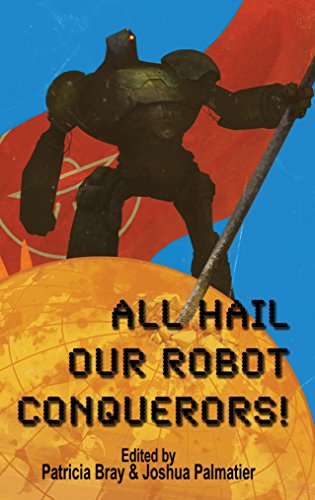
I'm very pleased to report that my short story Iron Hail is included in the Zombies Need Brains anthology All Hail Our Robot Conquerors. This is available now for pre-order on Amazon and due for release on Friday 1st September.
RRRAWRRR!!! ZZZZZZTTTTT!!! ZZZZAAAAPPPPP!!!
The robots of the 50s and 60s science fiction movies and novels captured our hearts and our imaginations. Their clunky, bulbous bodies with their clear domed heads, whirling antennae, and randomly flashing lights staggered ponderously across the screen and page and into our souls—whether as a constant companion or as the invading army threatening to exterminate our world. We can never return to that innocent time, where the robots could be identified by their burning red eyes or our trusty robot sidekick would warn us instantly of danger— Or can we?
With a touch of nostalgia and a little tongue-in-cheek humor, here are fifteen stories from today’s leading science fiction and fantasy authors that take us back to the time of evil robot overlords, invading armies, and not-quite-trustworthy mechanical companions. Join Julie E. Czerneda, Brandon Daubs, Tanya Huff, Brian Trent, L.E. Modesitt, Jr., Jason Palmatier, Jez Patterson, Gini Koch, Lauren Fox, Sharon Lee & Steve Miller, Philip Brian Hall, Rosemary Edghill, R. Overwater, Helen French, and Seanan McGuire as we step into the future with a nod to the past. Hold on to those stun guns. You may need them!
RRRAWRRR!!! ZZZZZZTTTTT!!! ZZZZAAAAPPPPP!!!
The robots of the 50s and 60s science fiction movies and novels captured our hearts and our imaginations. Their clunky, bulbous bodies with their clear domed heads, whirling antennae, and randomly flashing lights staggered ponderously across the screen and page and into our souls—whether as a constant companion or as the invading army threatening to exterminate our world. We can never return to that innocent time, where the robots could be identified by their burning red eyes or our trusty robot sidekick would warn us instantly of danger— Or can we?
With a touch of nostalgia and a little tongue-in-cheek humor, here are fifteen stories from today’s leading science fiction and fantasy authors that take us back to the time of evil robot overlords, invading armies, and not-quite-trustworthy mechanical companions. Join Julie E. Czerneda, Brandon Daubs, Tanya Huff, Brian Trent, L.E. Modesitt, Jr., Jason Palmatier, Jez Patterson, Gini Koch, Lauren Fox, Sharon Lee & Steve Miller, Philip Brian Hall, Rosemary Edghill, R. Overwater, Helen French, and Seanan McGuire as we step into the future with a nod to the past. Hold on to those stun guns. You may need them!
Labels:
All Hail Our Robot Conquerors,
anthology,
Iron Hail,
Philip Brian Hall,
science fiction,
short story,
Zombies Need Brains
Thursday, 24 August 2017
Heavy Weather
I'm delighted to announce that my short story 'Heavy Weather' has been accepted for the forthcoming Flame Tree Publishing anthology 'Pirates and Ghosts'.
Some of my readers will know of my enthusiasm for sailing ships, and of course I'm not long back from a cruise aboard the lovely barquentine Star Flyer.
Having been, since my youth a voracious reader of nautical tales, it seems I might be able to write them too. You may remember the first podcast of my work a year or so ago when Gallery of Curiosities put out 'Last of the Spice Schooners'.
Flame Tree do produce the most beautiful hardbacks and their lovely volumes intersperse classic authors with newer names. This volume includes work by Joseph Conrad, James Fenimore Cooper, Stephen Crane, F. Marion Crawford, Arthur Conan Doyle, William Hope Hodgson, Homer, W.W. Jacobs, Rudyard Kipling, Vernon Lee, H.P. Lovecraft, Richard Middleton, Edgar Allan Poe, Robert Louis Stevenson, and H.G. Wells.
Some of my readers will know of my enthusiasm for sailing ships, and of course I'm not long back from a cruise aboard the lovely barquentine Star Flyer.
Having been, since my youth a voracious reader of nautical tales, it seems I might be able to write them too. You may remember the first podcast of my work a year or so ago when Gallery of Curiosities put out 'Last of the Spice Schooners'.
Flame Tree do produce the most beautiful hardbacks and their lovely volumes intersperse classic authors with newer names. This volume includes work by Joseph Conrad, James Fenimore Cooper, Stephen Crane, F. Marion Crawford, Arthur Conan Doyle, William Hope Hodgson, Homer, W.W. Jacobs, Rudyard Kipling, Vernon Lee, H.P. Lovecraft, Richard Middleton, Edgar Allan Poe, Robert Louis Stevenson, and H.G. Wells.
Tuesday, 22 August 2017
This year's butterflies
I wouldn't normally find the appearance of a Red Admiral butterfly (Vanessa atalanta) all that remarkable. On Sliabh Mannan these butterflies are usually relatively common but have been scarce this year. Peacock, likewise usually relatively common, have been almost completely absent.
I suspect the lengthy period of significant summer rain has been too much for some of the larger species. Quite often the butterflies I've seen have been short of bits of wing.
This specimen however was particularly bright and may well have been recently-emerged. I wonder if there might yet be a late-season surge?
By contrast Orange Tip in the late Spring, Ringlet in early summer and Green Veined White much of the time have been abundant, and a Painted Lady, not seen for years, did appear in the garden. Their periods of emergence were marked by more clement weather.
I suspect the lengthy period of significant summer rain has been too much for some of the larger species. Quite often the butterflies I've seen have been short of bits of wing.
This specimen however was particularly bright and may well have been recently-emerged. I wonder if there might yet be a late-season surge?
By contrast Orange Tip in the late Spring, Ringlet in early summer and Green Veined White much of the time have been abundant, and a Painted Lady, not seen for years, did appear in the garden. Their periods of emergence were marked by more clement weather.
Labels:
butterfly,
red admiral,
Sliabh Mannan,
Vanessa atalanta
Friday, 18 August 2017
Getting at the truth
We all think we know the meaning of the word truth. We all think that, if asked, we can give examples of it. We might even call these examples things we know (for sure).
Yet philosophers have written volumes attempting to define truth. If it’s so simple that everybody knows what it means, what did they find to write about?
My own ideas of truth were probably most profoundly influenced by Bernard Williams. He suggested the first issue for us to resolve must be whether truth is external or internal to ourselves. Is it something out there, waiting for us to recognize it, or is it something in our own heads?
If it’s the latter, then is there anything to stop what’s in my head (my truth) from being different from what’s in yours (your truth)? Might there be as many truths as people? Wouldn’t that be effectively the same as truth not existing at all?
If truth is external, then how did ‘what’s out there’ get into my head? How reliable is the perceptual mechanism that put it there?
The problem here is that we don’t have direct access to the outside world. We perceive by way of senses that are specific to ourselves and yield data relative to ourselves. That’s a good thing. It’s best that I should perceive, say, threats to myself in the most direct way possible. If a charging rhino’s fifty feet away from me, I’d quite like to know about it, and only it, rather than be provided with a total world picture.
The drawback to this system is, we can’t see anything absolutely. Our brains have become expert at deducing what absolutes must be there in order for them to receive the relative impressions they do, and most of the time they’re right, but not always. We may greet a friend in the street, say, only to find when he turns around that it’s not actually him. In other words, we all make mistakes.
Our brains use not only sensory inputs, sight, sound, touch, taste and smell, but also our own experiences and our cultural upbringing in order to make sense of the world and produce the perceptions they register. No two people therefore will have identical perceptions of anything, but similar people from similar backgrounds will have perceptions that overlap a lot, sufficiently for us to call that overlap truth.
It is however important to remember the relative nature of that overlap. Our truth describes the world as seen by people like us. There are alternative truths out there. It is not the case that everyone who disagrees with us is a fool, a rogue, or lying.
We are all rational people, aren’t we? We aren’t going to change our own notion of the truth because someone shouts at us, calls us rude names, or blocks us on Facebook. We’re stubborn, so that sort of thing only confirms our belief we’re right. The only thing that will persuade us we’re wrong is evidence. Like when the person who’s not the friend we think he is actually turns round.
So why oh why do some people apparently think other people will change their minds in response to abuse, threats, no-platforming or anything else except evidence and reason?
Yet philosophers have written volumes attempting to define truth. If it’s so simple that everybody knows what it means, what did they find to write about?
My own ideas of truth were probably most profoundly influenced by Bernard Williams. He suggested the first issue for us to resolve must be whether truth is external or internal to ourselves. Is it something out there, waiting for us to recognize it, or is it something in our own heads?
If it’s the latter, then is there anything to stop what’s in my head (my truth) from being different from what’s in yours (your truth)? Might there be as many truths as people? Wouldn’t that be effectively the same as truth not existing at all?
If truth is external, then how did ‘what’s out there’ get into my head? How reliable is the perceptual mechanism that put it there?
The problem here is that we don’t have direct access to the outside world. We perceive by way of senses that are specific to ourselves and yield data relative to ourselves. That’s a good thing. It’s best that I should perceive, say, threats to myself in the most direct way possible. If a charging rhino’s fifty feet away from me, I’d quite like to know about it, and only it, rather than be provided with a total world picture.
The drawback to this system is, we can’t see anything absolutely. Our brains have become expert at deducing what absolutes must be there in order for them to receive the relative impressions they do, and most of the time they’re right, but not always. We may greet a friend in the street, say, only to find when he turns around that it’s not actually him. In other words, we all make mistakes.
Our brains use not only sensory inputs, sight, sound, touch, taste and smell, but also our own experiences and our cultural upbringing in order to make sense of the world and produce the perceptions they register. No two people therefore will have identical perceptions of anything, but similar people from similar backgrounds will have perceptions that overlap a lot, sufficiently for us to call that overlap truth.
It is however important to remember the relative nature of that overlap. Our truth describes the world as seen by people like us. There are alternative truths out there. It is not the case that everyone who disagrees with us is a fool, a rogue, or lying.
We are all rational people, aren’t we? We aren’t going to change our own notion of the truth because someone shouts at us, calls us rude names, or blocks us on Facebook. We’re stubborn, so that sort of thing only confirms our belief we’re right. The only thing that will persuade us we’re wrong is evidence. Like when the person who’s not the friend we think he is actually turns round.
So why oh why do some people apparently think other people will change their minds in response to abuse, threats, no-platforming or anything else except evidence and reason?
Labels:
absolute truth,
Bernard Williams,
external truth,
internal truth,
perception,
relative truth,
truth
Phantaxis - Free Today until Sunday
A reminder that the digital version of Phantaxis' August edition is available for free download from today until Sunday.
My story is called The Ship of Theseus. I hope you enjoy it.
Labels:
digital edition,
e-book,
ebook,
Phantaxis,
Philip Brian Hall,
short story
Thursday, 17 August 2017
Venice by Night Again!
Showing the value of feedback, I'm republishing my four views from Ponte degli Scalzi with a little post-processing courtesy of the freely-downloadable GIMP graphics program. These versions are much brighter and more contrast-enhanced than the orginals. On the other hand they're less dark and mysterious. I'd beinterested to know what you think.
f4.6

f11


f4.6
f11
Friday, 11 August 2017
Venice by night
Here are four views of The Grand Canal from the Ponte degli Scalzi:
For photography enthusiasts, the first photo looking towards the church of San Simeone Piccolo was 1/3 sec at f 4.5 on ISO 200. Compare it with the last one. This one I think looks much warmer and softer.
The restaurant on the left in the second picture is where we had our last dinner in Venice, and we couldn't have been much closer to the canal.
Above is the opposite side of the canal from our restaurant.
This one was 1/5 sec at f 11 on ISO 3200 just to see if it would be usable. The difference in result from the first picture is quite interesting, I think. The water of the canal looks almost frozen.
Well that more or less concludes my series of holiday reports. I hope you found at least some of them interesting. Now it's back to daily showers instead of a Mediterranean heat wave, but at least the dogue was glad to see us home!
Labels:
Grand Canal,
Ponte degli Scalzi,
San Simeone Piccolo,
Venice
Thursday, 10 August 2017
Venice by vaporetto
We discovered by accident that day tickets (and perhaps longer seasons) on the ‘little steamships’ or vaporettos (such as the one above lower left) are good value. Though this is the ‘bus service’ of Venice, it’s considerably more fun than a regular bus, most of the time.
Forty euros buys you uno giorno per due (one day ticket x 2 people). This entitles you to unlimited journeys during the day. You can hop on for a couple of stops or sail around the lagoon all day. It not only saves your feet but gives you unusual views of the city (such as The Grand Canal from the middle, below left).
Tip number one: get hold of a route map. The variously numbered vaporettos follow different routes and only small sections of a single route are displayed aboard the vessels. When planning your journey and deciding where you need to change lines it’s a nuisance to rely on the full maps that are only posted (if you’re lucky) at the stops.
Tip number two: make sure you’re at the right stop. Sometimes there are several stops next to each other, each serving different routes, and at a major interchange such as Lido di Venezia the array of stops can be about a hundred yards long. Be particularly careful not to get on the right number vaporetto going in the wrong direction.
Tip number three: you have to present the face of your ticket to an electronic card reader each time you access the boarding pontoon, even if there isn’t a physical barrier to be opened. Having a properly recorded ticket is part of the system and you’re not supposed to be on the landing stage without one, let alone the boat.
Tip number four: it’s great to visit the outlying island stops (such as Burano, right) but try not to schedule your departure for the same time as everyone else, for example late afternoon when everyone’s thinking of heading back to the hotel to get ready for dinner. Failure to observe this rule may lead to overcrowding on the landing stage and failure to catch the vaporetto you want.
But hey, these are pretty simple rules and there are lots of fascinating places nearby. Venice isn’t just St Mark’s Square, the Doge’s Palace and the Bridge of Sighs you know. In fact if you go fifty to a hundred yards off the main tourist routes you may well wonder what all the fuss over excessive numbers is about.
Labels:
Burano,
Grand Canal,
season ticket,
vaporetto,
Venice
Monday, 7 August 2017
The Ship of Theseus is in Phantaxis
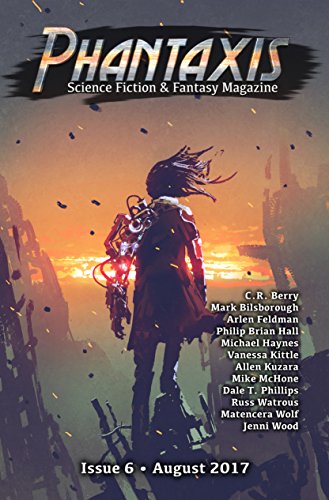
I'm pleased to announce that my short story The Ship of Theseus has been published in the August 2017 edition of Phantaxis Magazine.
I'm very fond of this story, in which an undercover cop in a dystopian future San Francisco discovers a lot more than he expected about how his world is being run.
Phantaxis is available in paperback or as an e-book.
I'm very fond of this story, in which an undercover cop in a dystopian future San Francisco discovers a lot more than he expected about how his world is being run.
Phantaxis is available in paperback or as an e-book.
PRINT: here
DIGITAL: here
Do note that the e-book version will be available for FREE download during a special promotion on Amazon from Friday August 18th 2017 to Sunday 20th inclusive.
I hope all of you will take advantage of this great offer. And if you like my story, please be sure to let everyone know!
P.S. Change of Promotion Date
The publisher has changed the ebook promotion dates to Friday August 18th, Saturday August 19th, and Sunday August 20th. The promotion will no longer run August 11th through 13th. as previously notified. Phantaxis wish to apologize for this change which was out of their hands.
Lošinj, Croatia
If you’re interested in The Adriatic, it won’t have escaped your attention that it hasn’t escaped anybody else’s attention either. Some of the more popular places are almost overwhelmed by the volume of tourism and some are already taking steps to moderate the pressure on their facilities. That fact is, it’s quite hard to enjoy being a tourist when surrounded by hundreds or thousands of other people all trying to do the same.
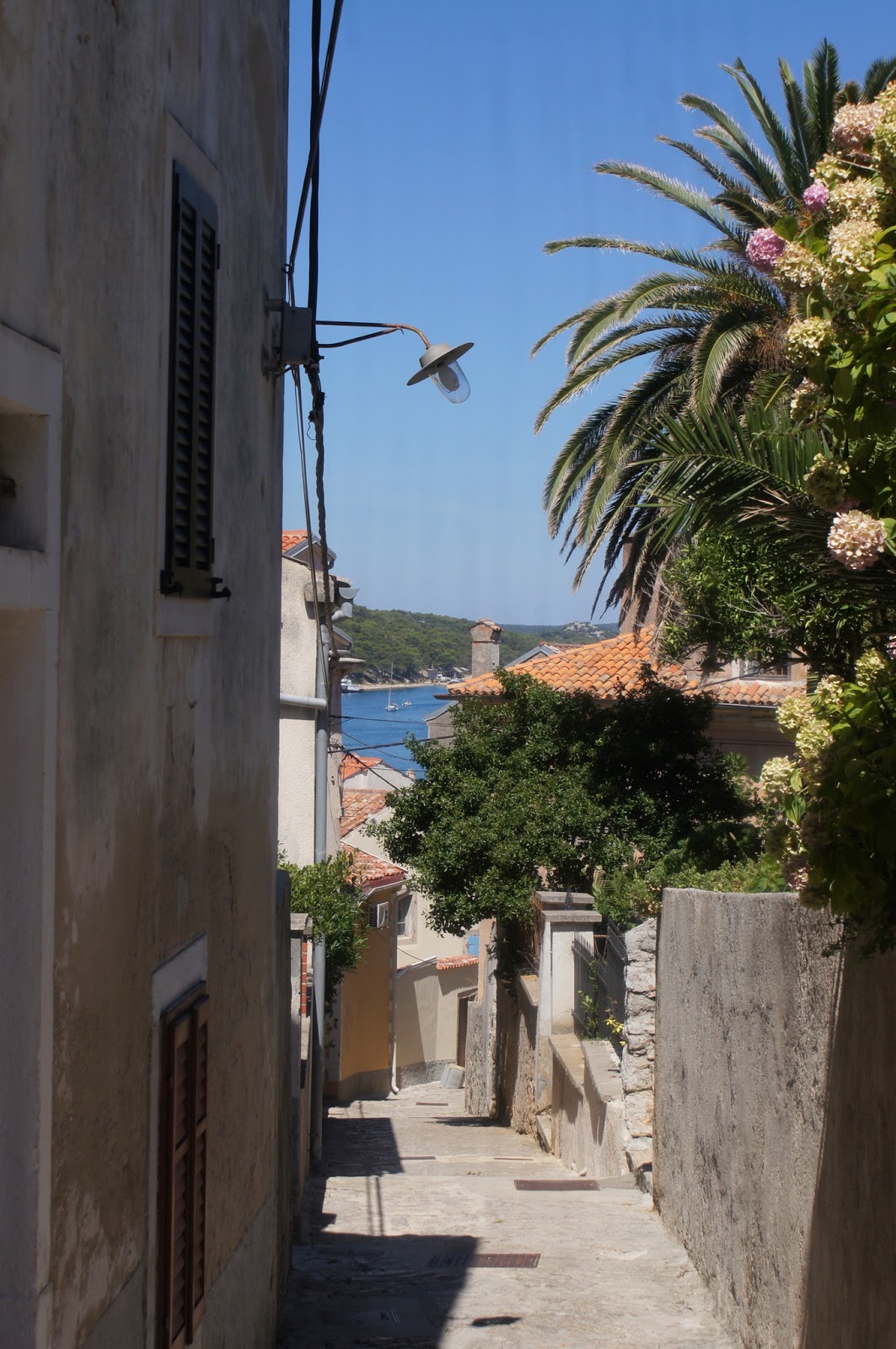
Step forward the island of Lošinj, which adds to its numerous attractions the absence of an airport. Though you can fly in by light aircraft or seaplane, the bulk of tourists are dependent upon ships. Last year the island was praised by The Independent newspaper as an overlooked jewel.
I can confirm that the little port of Mali Lošinj is far from overpopulated. Tourists here do seem to have room to breathe. When we visited it was also significantly cooler than our earlier stops, (a blessing). Perhaps this is why it has been called the island of vitality.
Labels:
Adriatic,
Croatia,
Lošinj,
Mali Lošinj,
The Independent
Sunday, 6 August 2017
Hvar Island, Croatia
I’m inclined to
wonder why Admiral Sir Thomas Fremantle isn’t more famous. Hvar
Island is another example of the outstanding achievements of his
frigate squadron in The Adriatic during the closing years of the
Naopleonic Wars. Again, considering that the fortress overlooking its
harbour is as formidable as that of Kotor, the success of these
relatively small ships in subduing the local French garrisons is
quite remarkable.
Like Korčula, Hvar was controlled by pirates and necessarily subdued by the Venetians in the early years of their empire. It also followed a similar path through to the independence of Croatia in 1991.
Last time we
visited, we climbed up to the fortress, from which the view is grand.
This year it was too hot for such exertions and we contented
ourselves with a pleasant walk through the back streets to the
monastery and back along the seafront, where boating and water-sports
are very popular.
The Old Town is beautifully preserved, with a spacious central plaza in front of the cathedral. Sadly we couldn’t walk up and down it in the relative cool of the evening, because by then we’d already sailed for our penultimate port of call.
Saturday, 5 August 2017
Korčula, Croatia
Above may well be the best of my holiday photographs.
Legend has it that the island of Korčula was settled by Trojan refugees led by Antenor. Whether you want your city to have been founded by King Priam’s adviser might, I suppose, depend on whether you regard Antenor as a hero, an appeaser or an outright traitor, in which latter case you agree with Dante.
It is known that
the island was later settled by Illyrians and Greeks, was conquered
by the Romans and later became a haven for pirates who vexed the
Venetians sufficiently for them to take it over themselves. Its
sailors distinguished themselves against the Turks at the decisive
Battle of Lepanto in 1571. Captured from the French by the British
towards the end of the Napoleonic Wars, Korčula
was subsequently
held by Austria-Hungary until it was incorporated into Yugoslavia
after the First World War. In 1991 it formed part of
newly-independent Croatia.
Today
the esplanade built by the British is a notable feature of a
beautiful city whose fortifications offer just the right sort of
romantic atmosphere to inspire fantasy writers, provided they can
stand the heat!
Friday, 4 August 2017
Dubrovnik, Croatia
Historically the
Republic of Ragusa, Dubrovnik’s prosperity was built upon maritime
trade and foreign settlements, making it a thalassocracy. This
brought it into rivalry with Venice, which actually ruled Ragusa in
the 13th and 14th centuries.
After the great
earthquake of 1667 it never really regained its former prominence and
for several centuries maintained its independence only as a vassal of
The Ottoman Empire. After the Napoleonic Wars Ragusa passed under the
control of Austria-Hungary and was incorporated into Yugoslavia after
the First World War.
A walk around the
city walls today is neither cheap nor in summer heat all that easy,
but it leads one to appreciate the work that has been done to restore
‘The Pearl of the Adriatic’ to its former glory.
Thursday, 3 August 2017
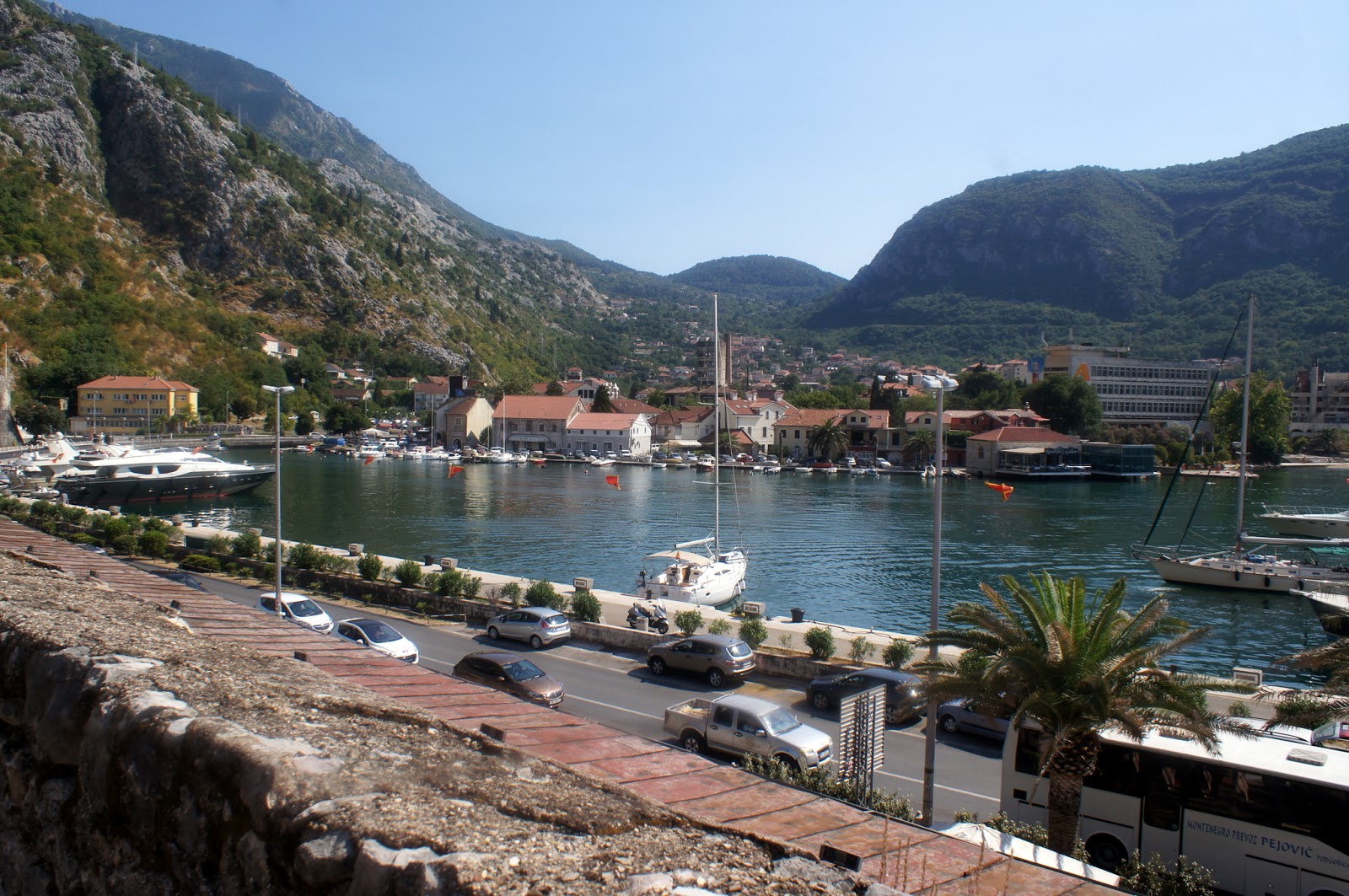
Kotor, Montenegro (Cattaro in Italian)
A while ago,
accusations flew around that Russia had tried to engineer a coup in
Montenegro to prevent it joining NATO. If so, the object of the
exercise was probably the port of Kotor, which would have given
Russia an Adriatic foothold.
In their day, the
Venetians, who held the place almost 400 years, the French and the
Austrians all thought the same. The natural harbour was relatively
easy to defend and its sheltered waters could hold an entire fleet
without difficulty.
During the
Napoleonic Wars Cattaro was the scene of a little known but brilliant
campaign. In 1813 the French garrison under Gauthier was besieged by
a Montenegrin force but able to hold out because it could be supplied
by sea.
Captain John
Harper’s 18-gun Royal Navy brig Saracen arrived in November to
assist the besiegers. Unable to sail up the long dog-leg,
mountain-girt fjord to the fortress, Harper rigged tow ropes and had
local people physically drag his ship into the huge inner harbour,
where she made re-supply impossible.
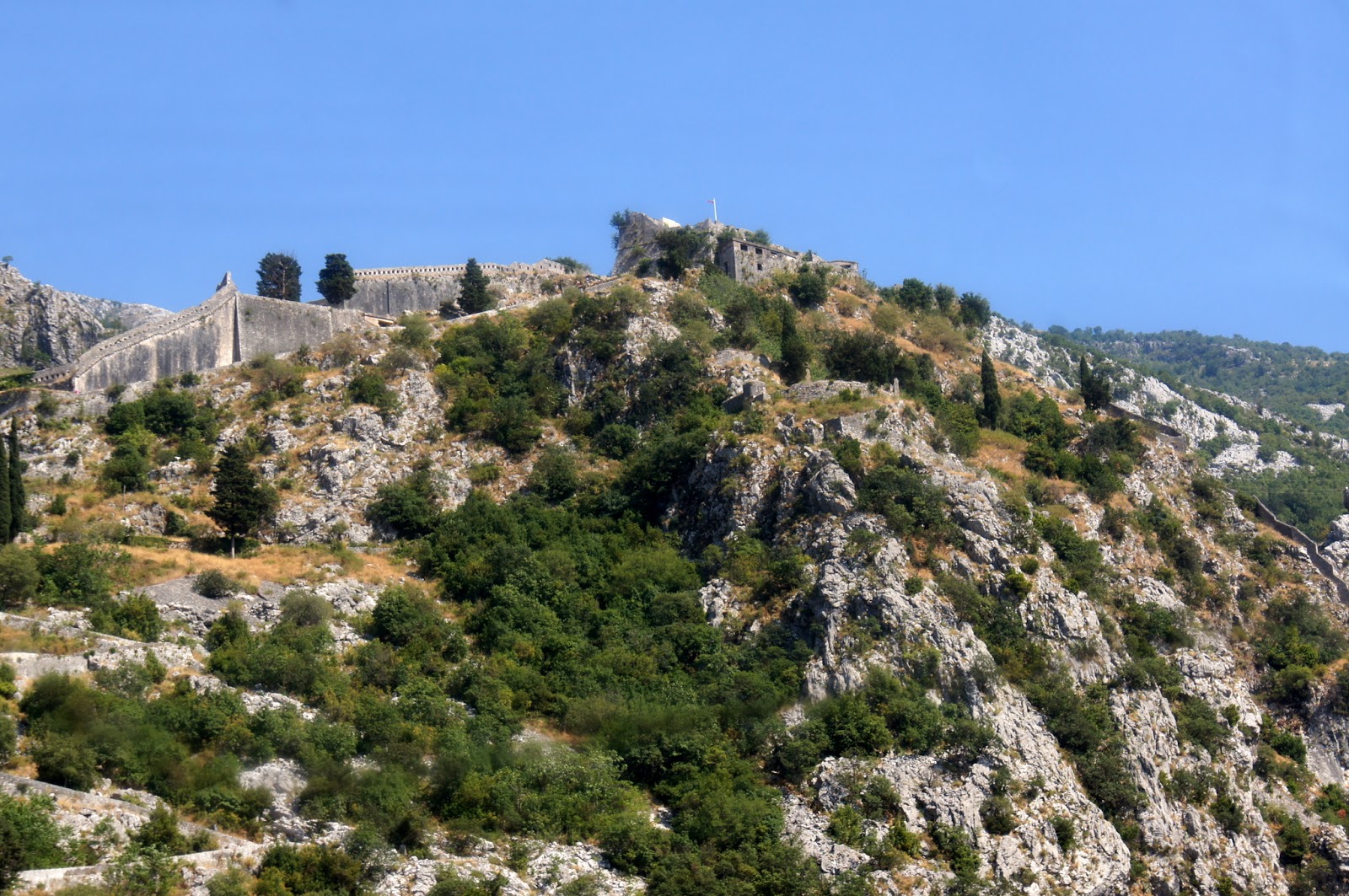
However the French could still withstand a siege as long as they held the Castle of St John,
whose guns commanded the port from its site half way up the
mountainside.
Harper dismounted an
18 pounder cannon from his ship and set his crew to haul it to the
top of the mountain, later assisted by The frigate Bacchante’s
arrival with a substantially larger crew. The operation took a month,
but finally succeeded. With his fortress under bombardment from
above, the French general was obliged to surrender.
I contemplated the
climb up to the castle but decided it was too much in the heat. The
view Gauthier enjoyed is said to be spectacular and an assault
against the Venetian defences would have been costly.
There is much to
enjoy in the little town itself, which abounds with merchant palaces,
interesting churches and fortifications.
Labels:
Adriatic,
Castle of St John,
Cattaro,
Kotor,
Montenegro,
Venetian
Subscribe to:
Posts (Atom)